Bogue Field, North Carolina

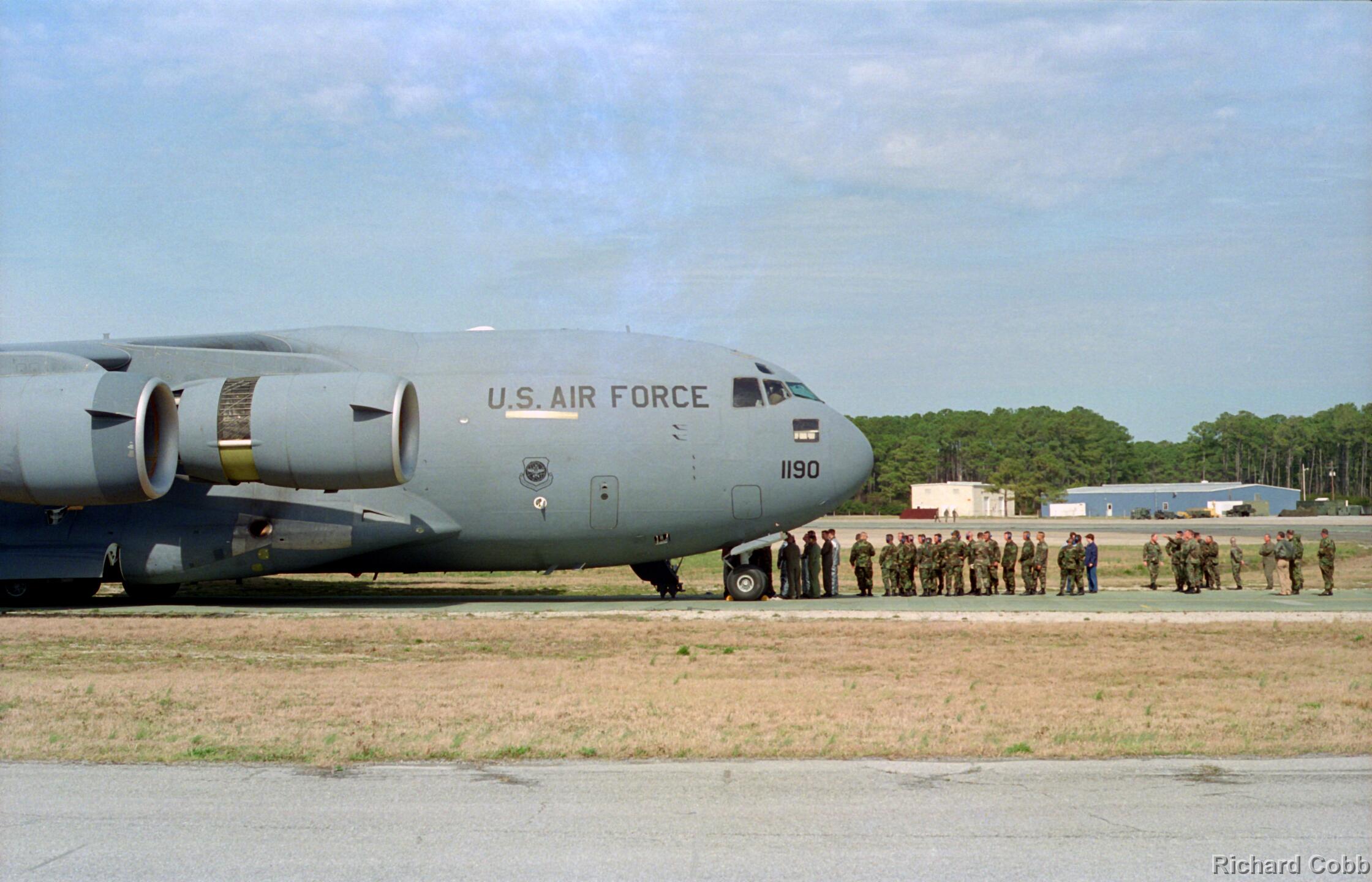
These photos were taken while working for NKF Engineering in March 1995. I was at Bogue Field, North Carolina to install accelerometers in a portable landing strip and record the data for multiple C-17 (Globemaster) landings. This data was to be used for analysis by another engineering firm to determine movement between the landing strip panels when a C-17 landed.


The portable landing strip is made up of interlocking metal panels which can be laid directly on a graded earth surface. A C-17 is larger than the planes that normally use this type of runway, and there was concern about the loads imposed on the runway by the braking forces of such a large aircraft.


The panels were hollow, and cabling was run inside of the panels. Holes had been drilled in the upper surface at selected locations through which small accelerometers could be installed. Over 50 channels of data was recorded to digital tape. Installing the accelerometers, connecting the cabling and calibrating each accel required between 3 and 4 days, followed by 2 days during which there were multiple C-17 landings and takeoffs


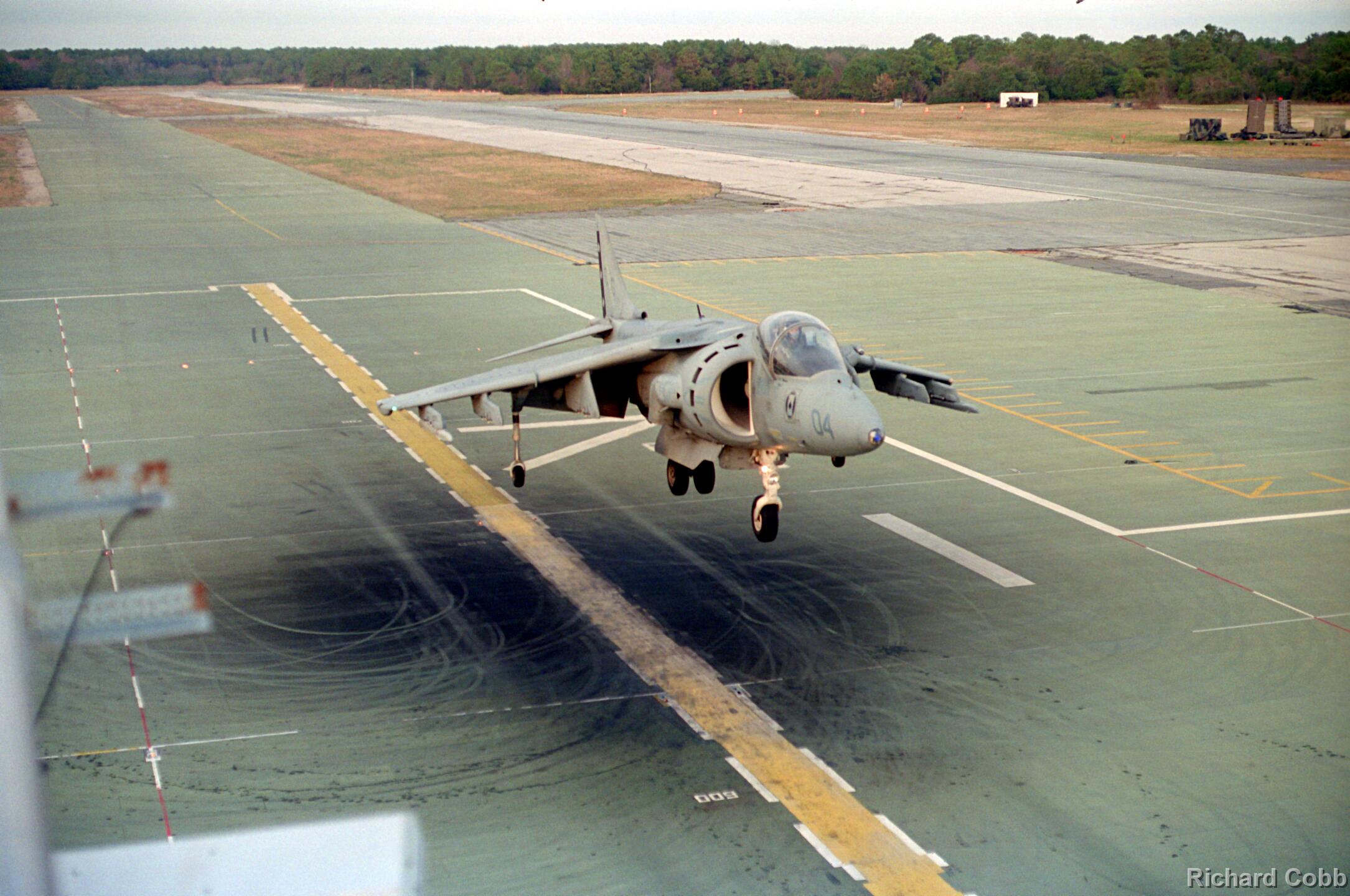
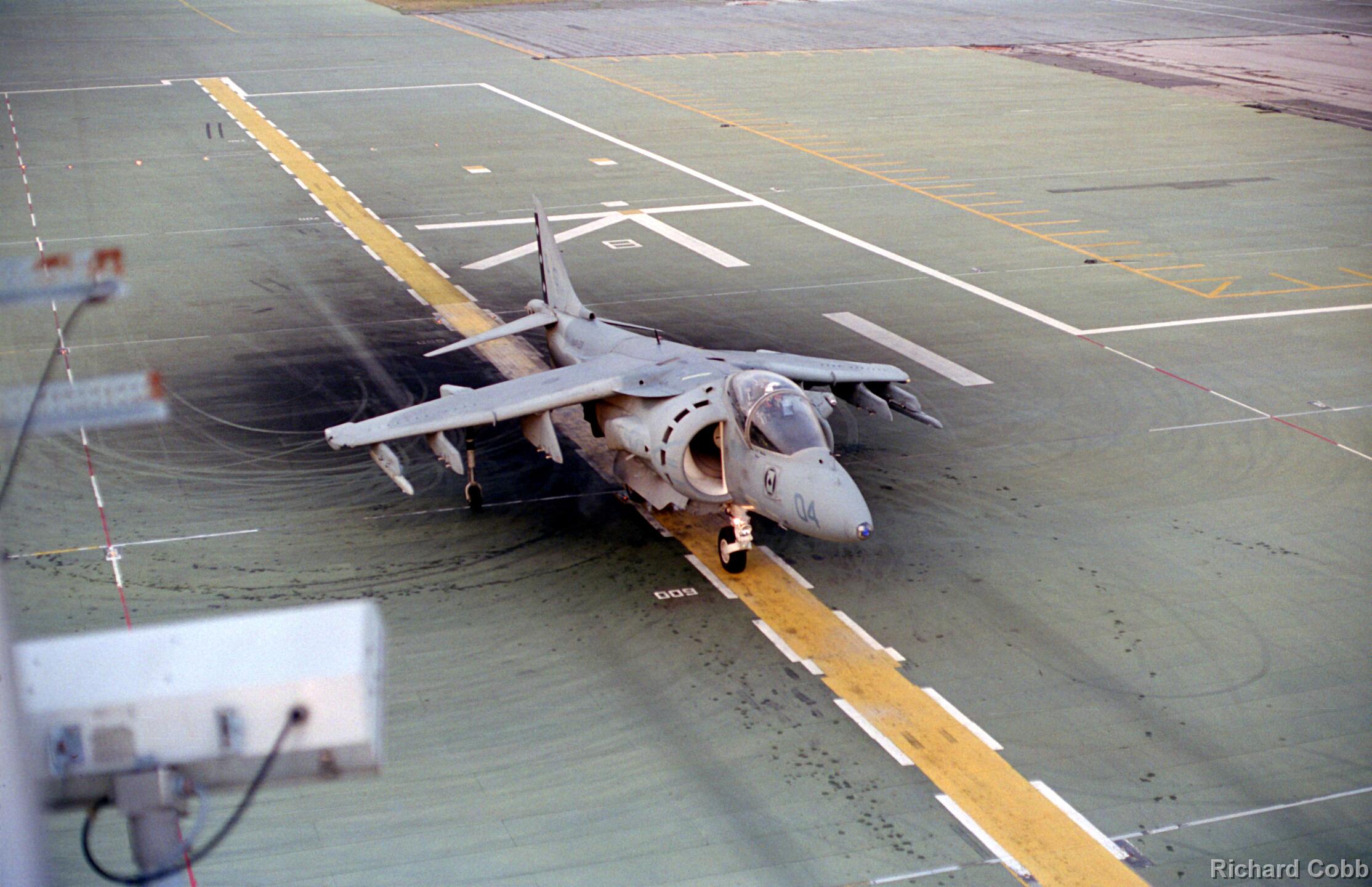
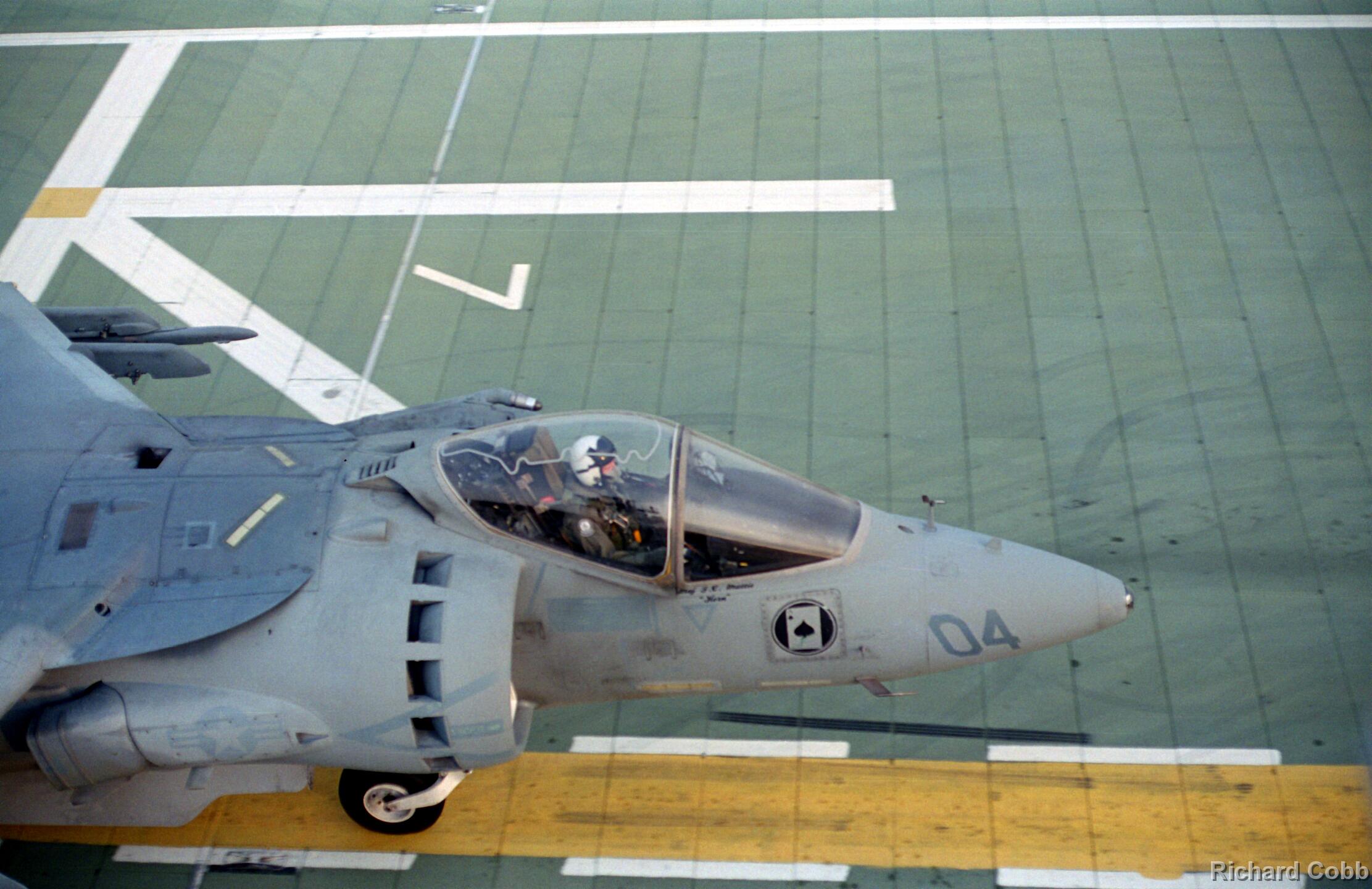
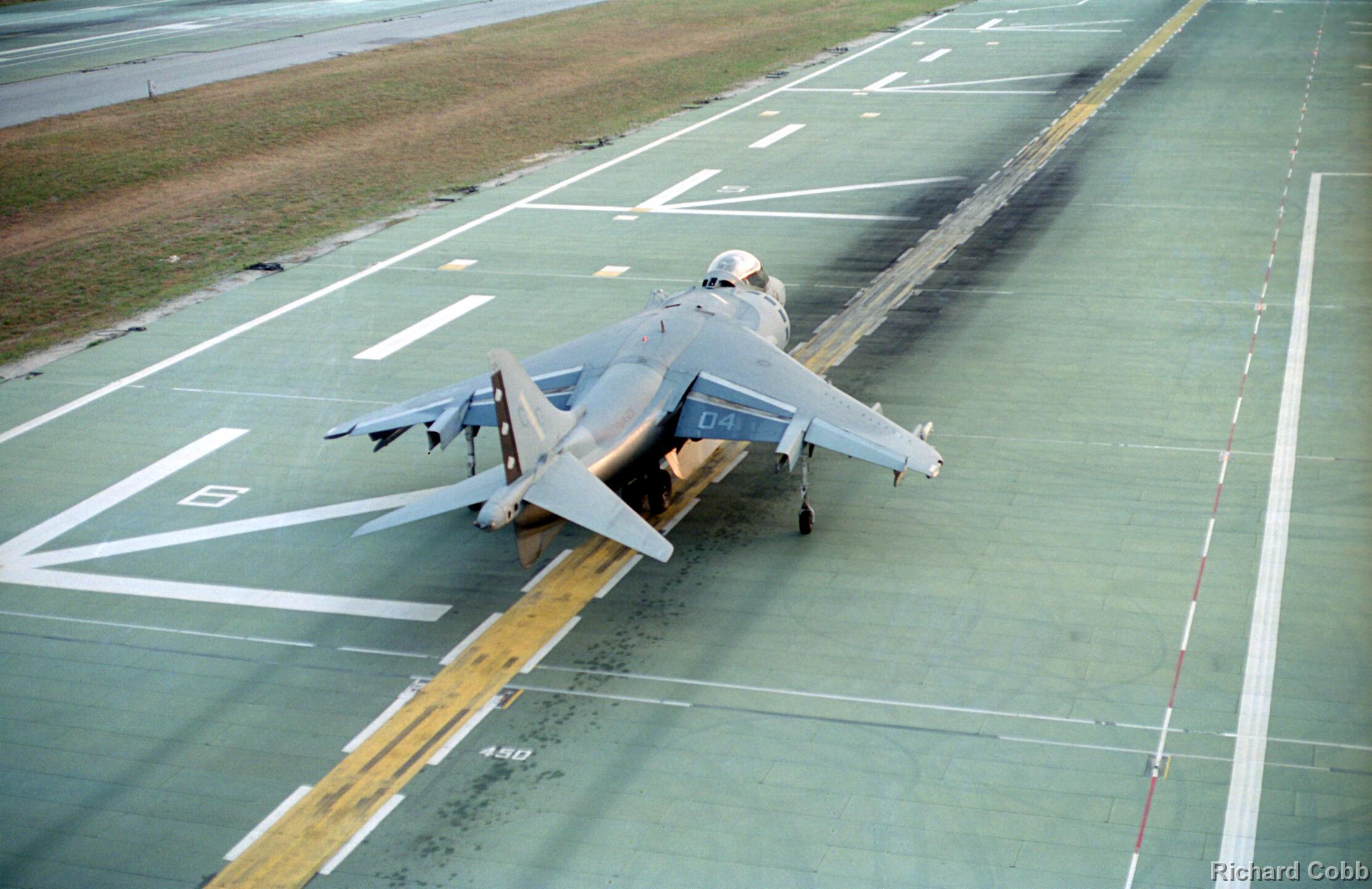
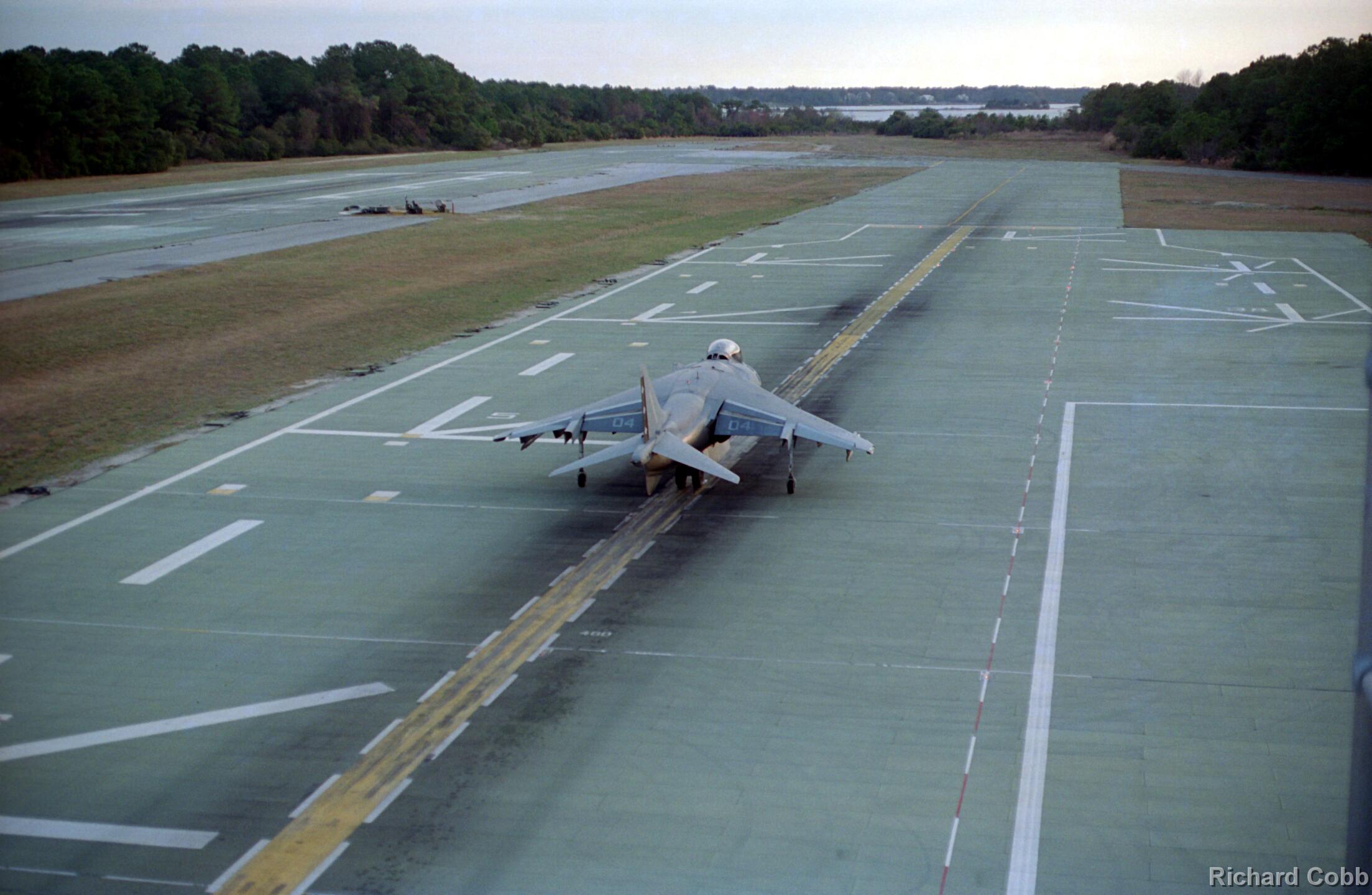
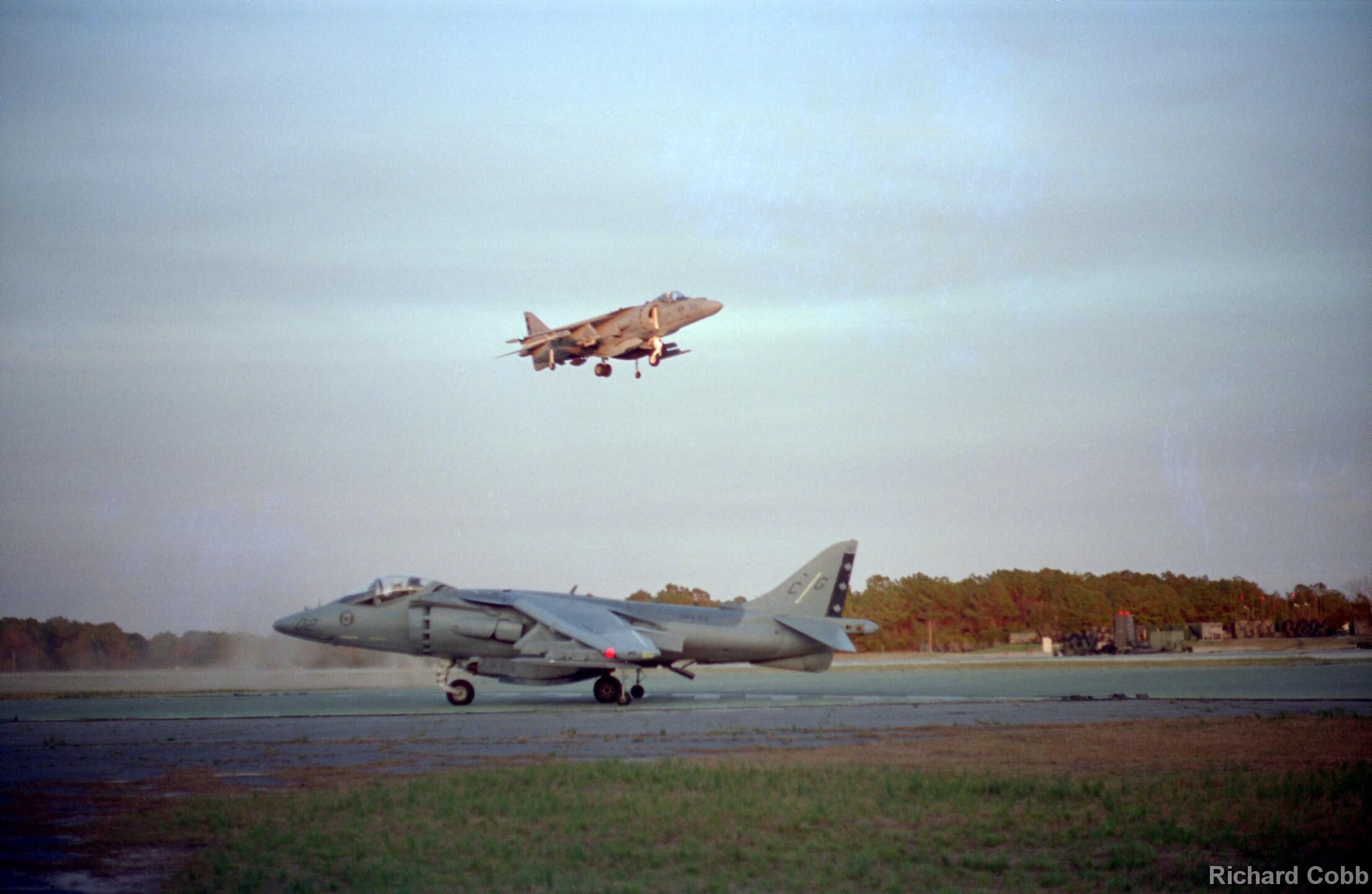
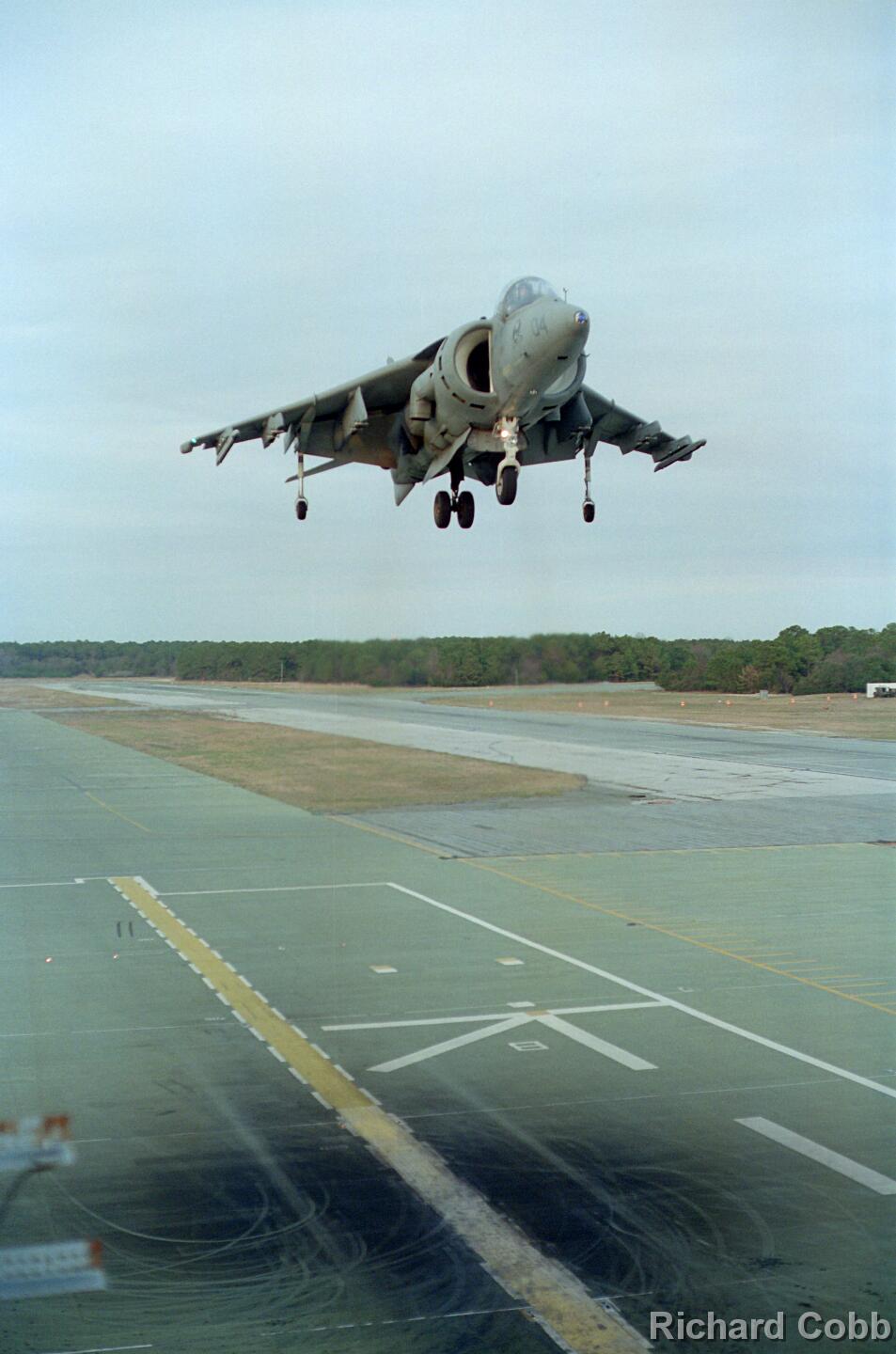
Harrier operations were being conducted during one of the days, and the Harrier photos were taken from a small, portable control tower that had a walkway around the outside. For some of the photos the Harriers were so close that the noise, heat, and kerosene (jet fuel) smell were almost overpowering. Even with double hearing protection (ear plugs + ear muffs) the sound levels were uncomfortably high. But it is very strange to see a jet aircraft hovering stationary just a few feet away from you!
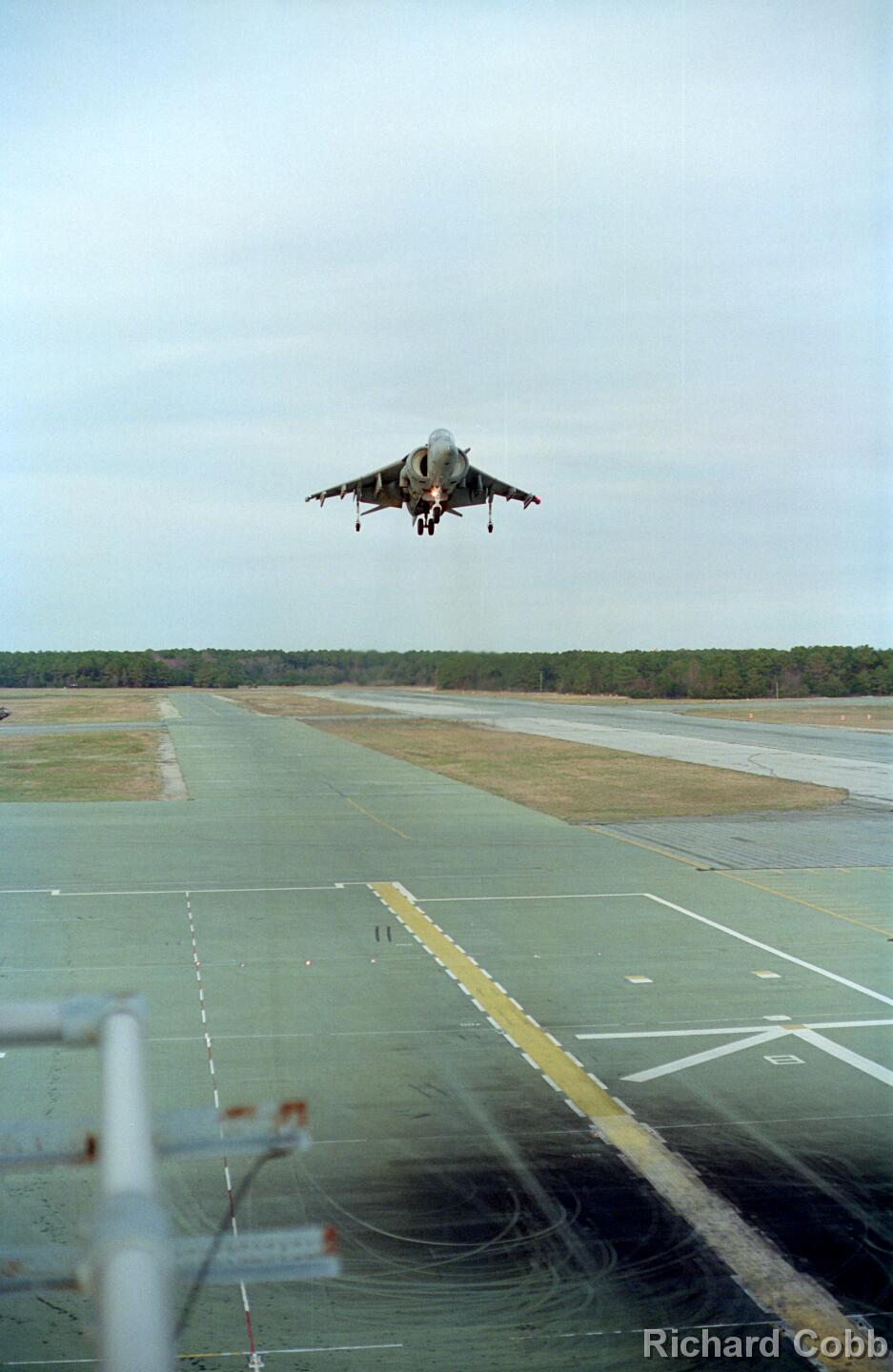
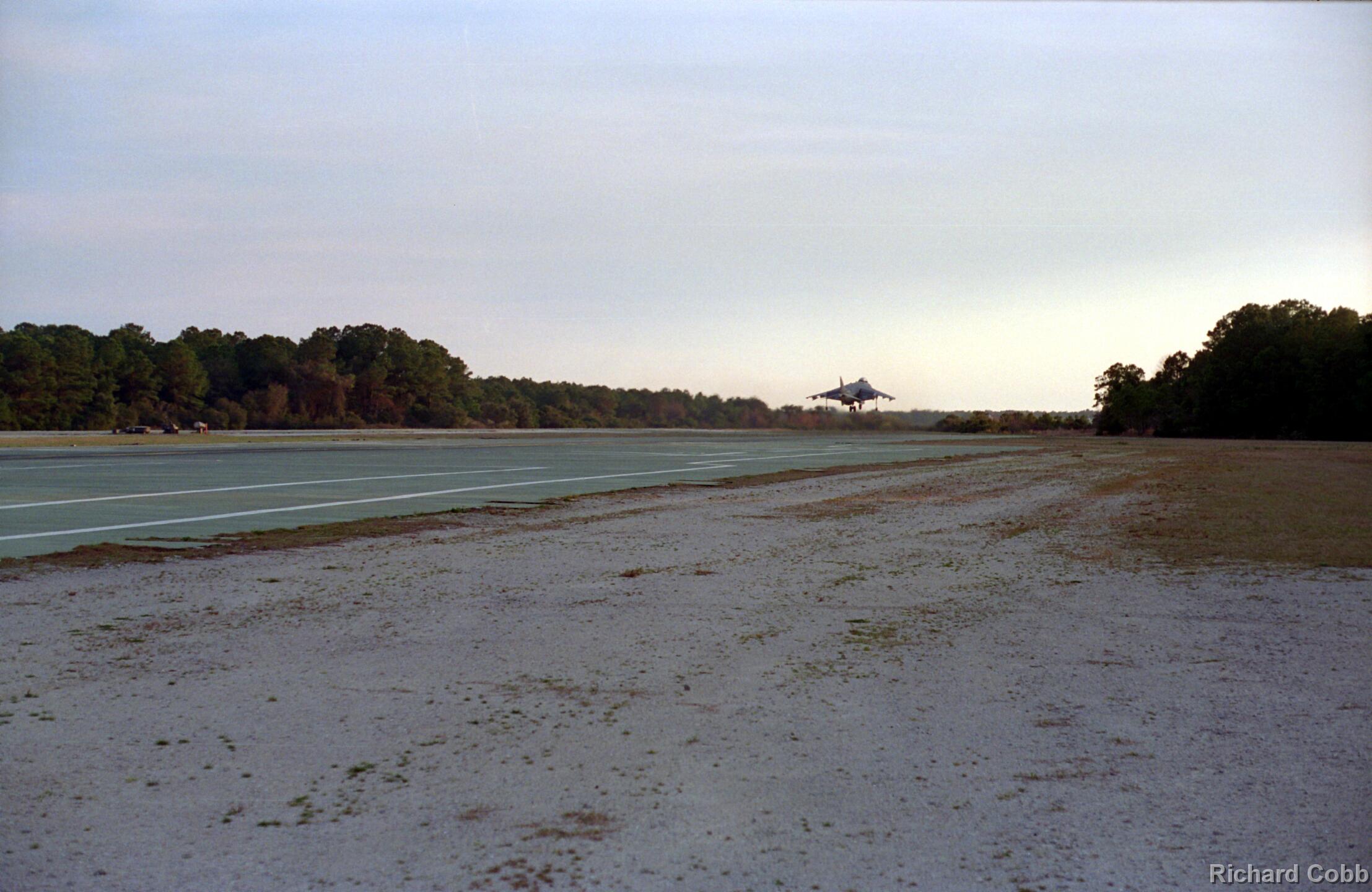
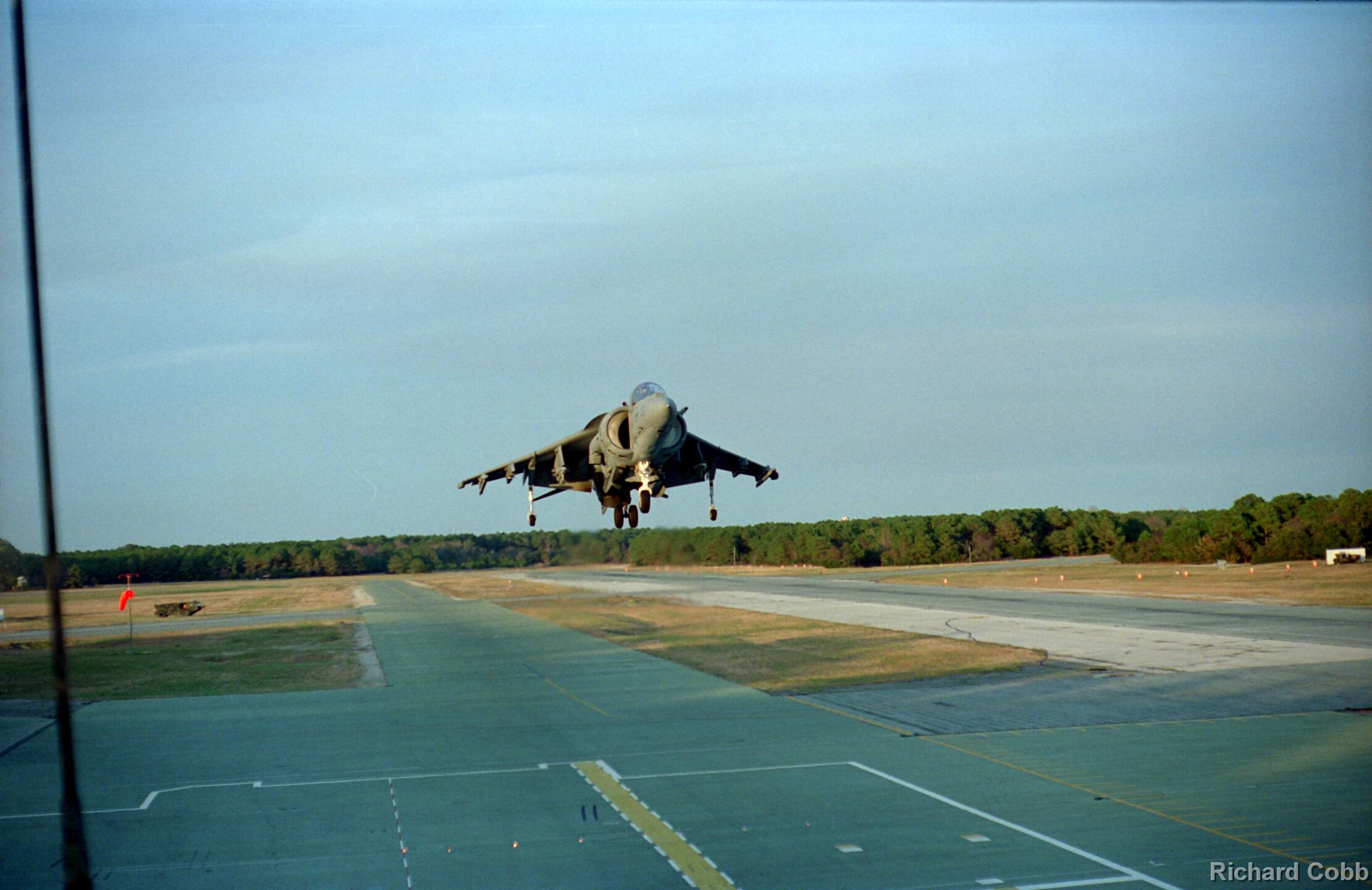
Harrier Approaching
I am standing on the walkway around a small "portable" control tower, which is adjacent to a "portable" airfield made of interlocking aluminum panels. The Harrier is slowing in the way that only Harriers can, with the target landing spot being the soot-black area at bottom right.
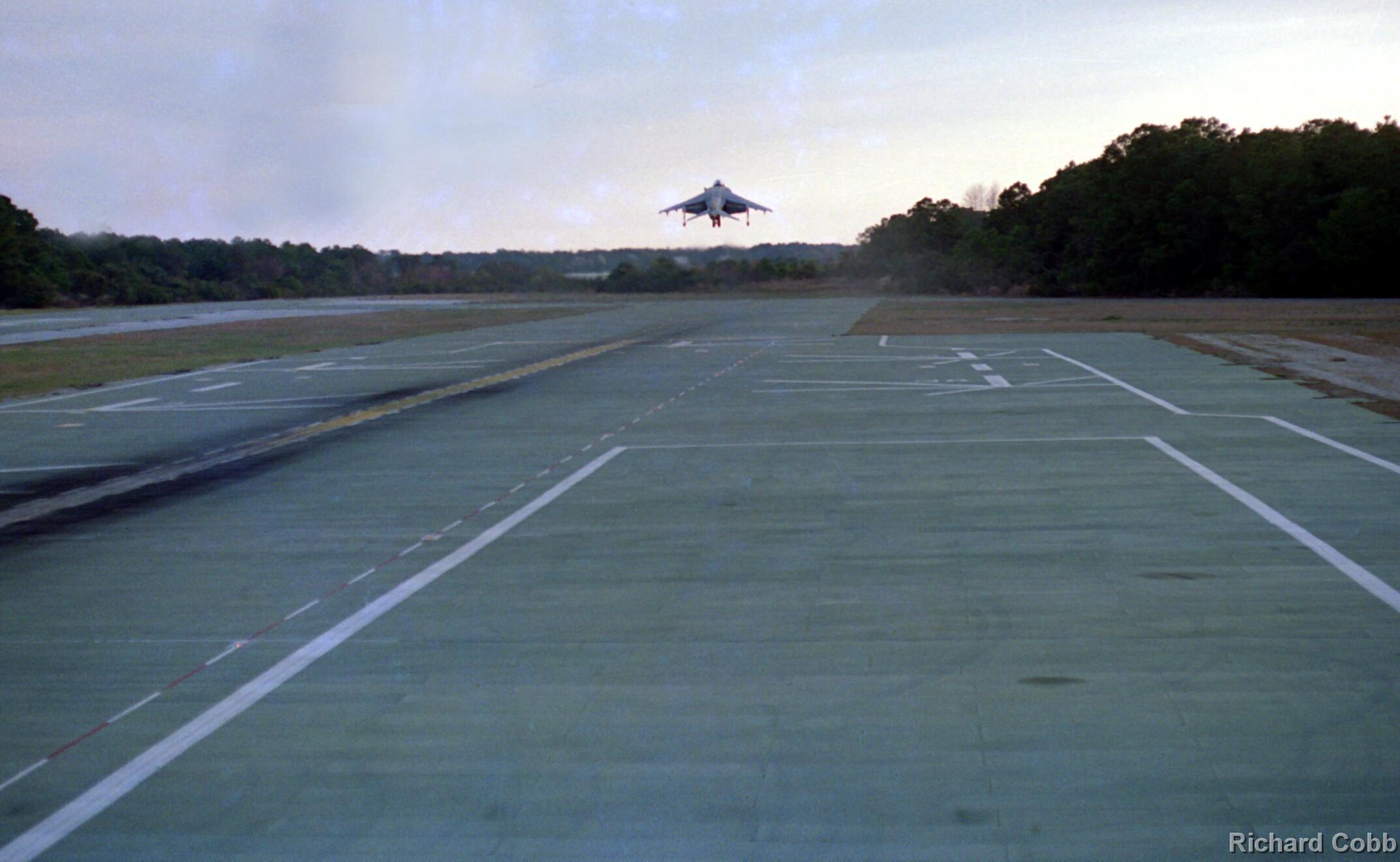
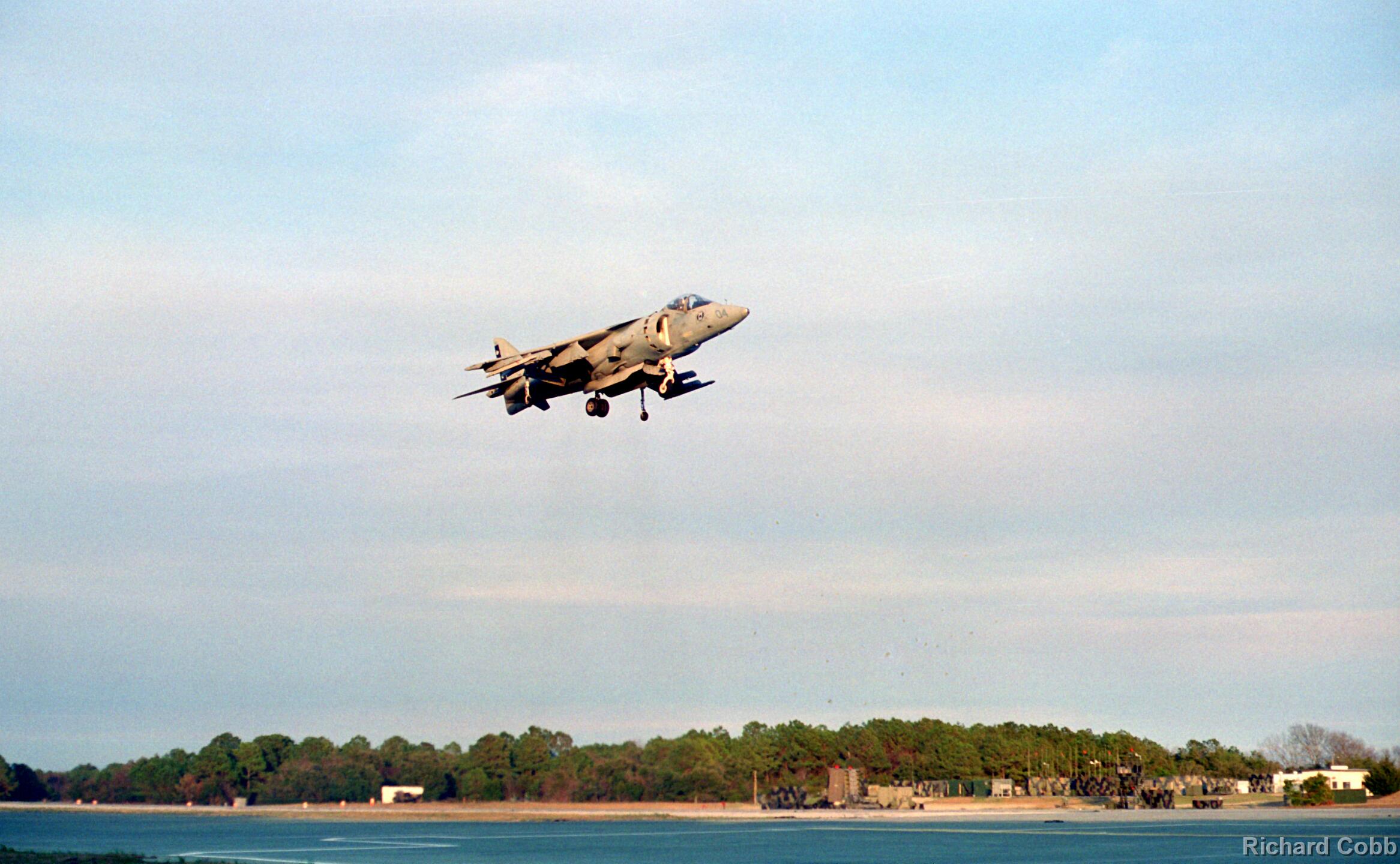
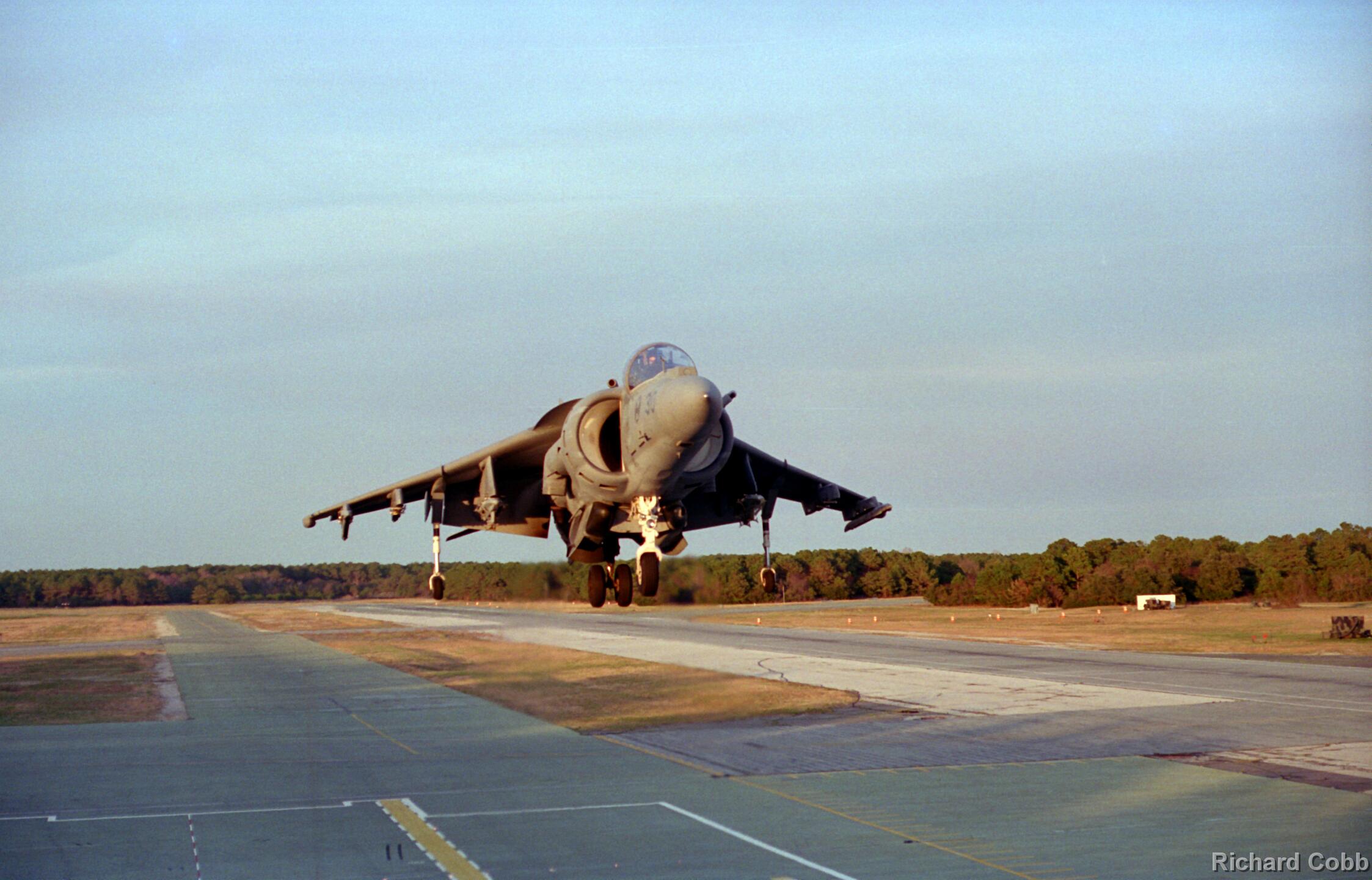
Just Hanging Out
It is remarkable to see a jet aircraft hovering stationary just a few feet away. It is also nearly overpowering. The sound overpowers even two layers of hearing protection, and the blast of heat and smell of burned kerosene are very uncomfortable.
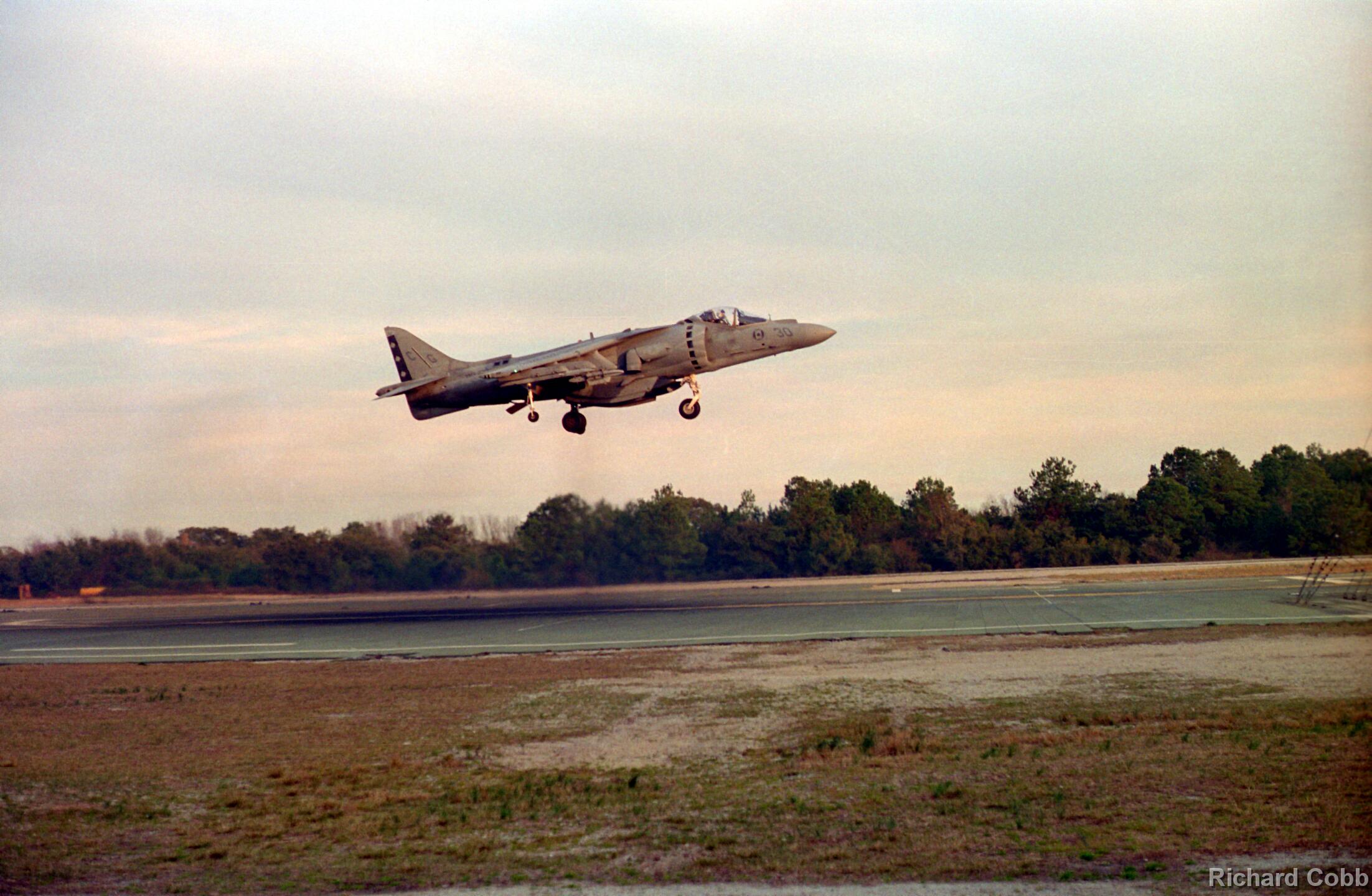
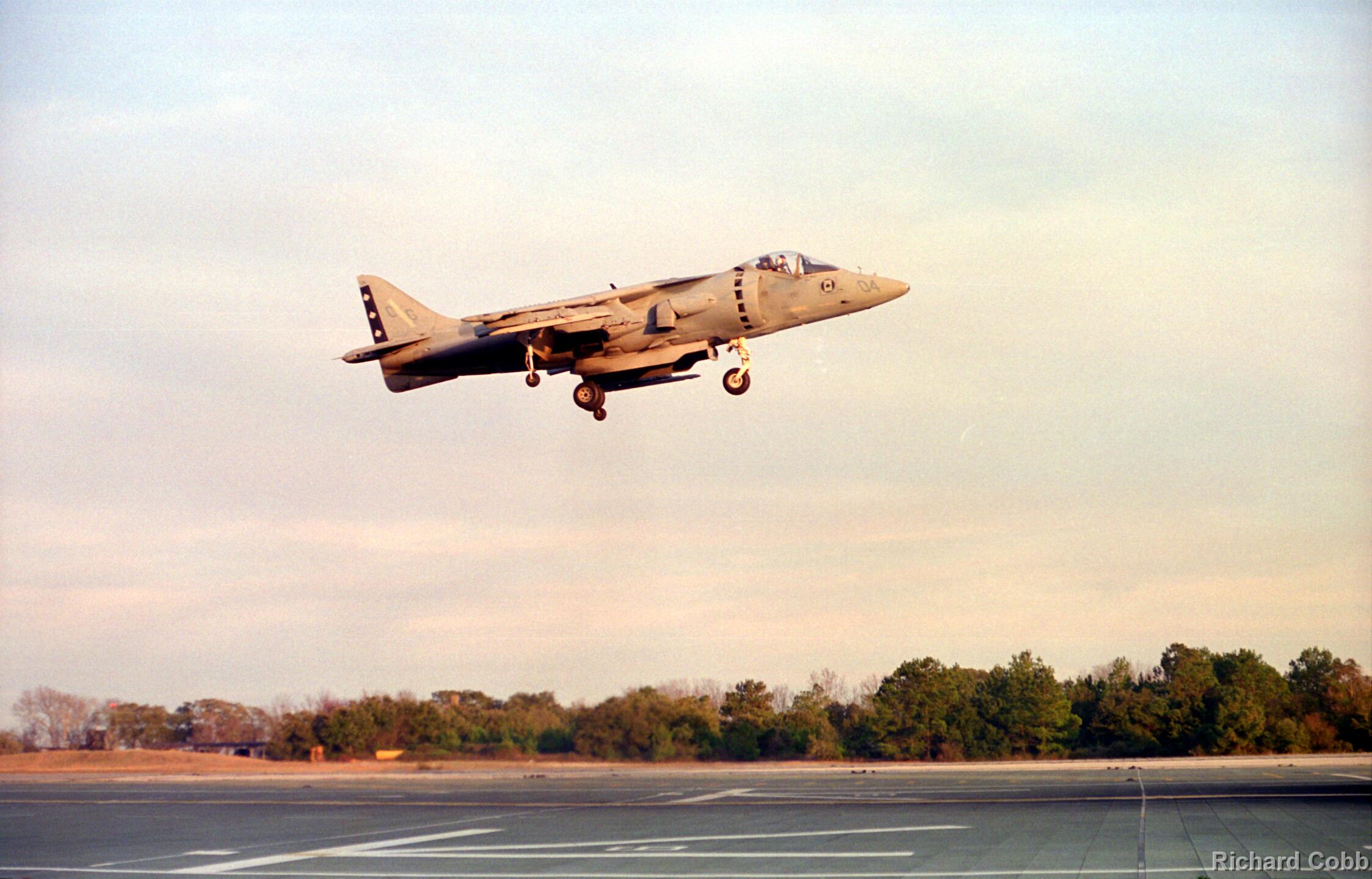
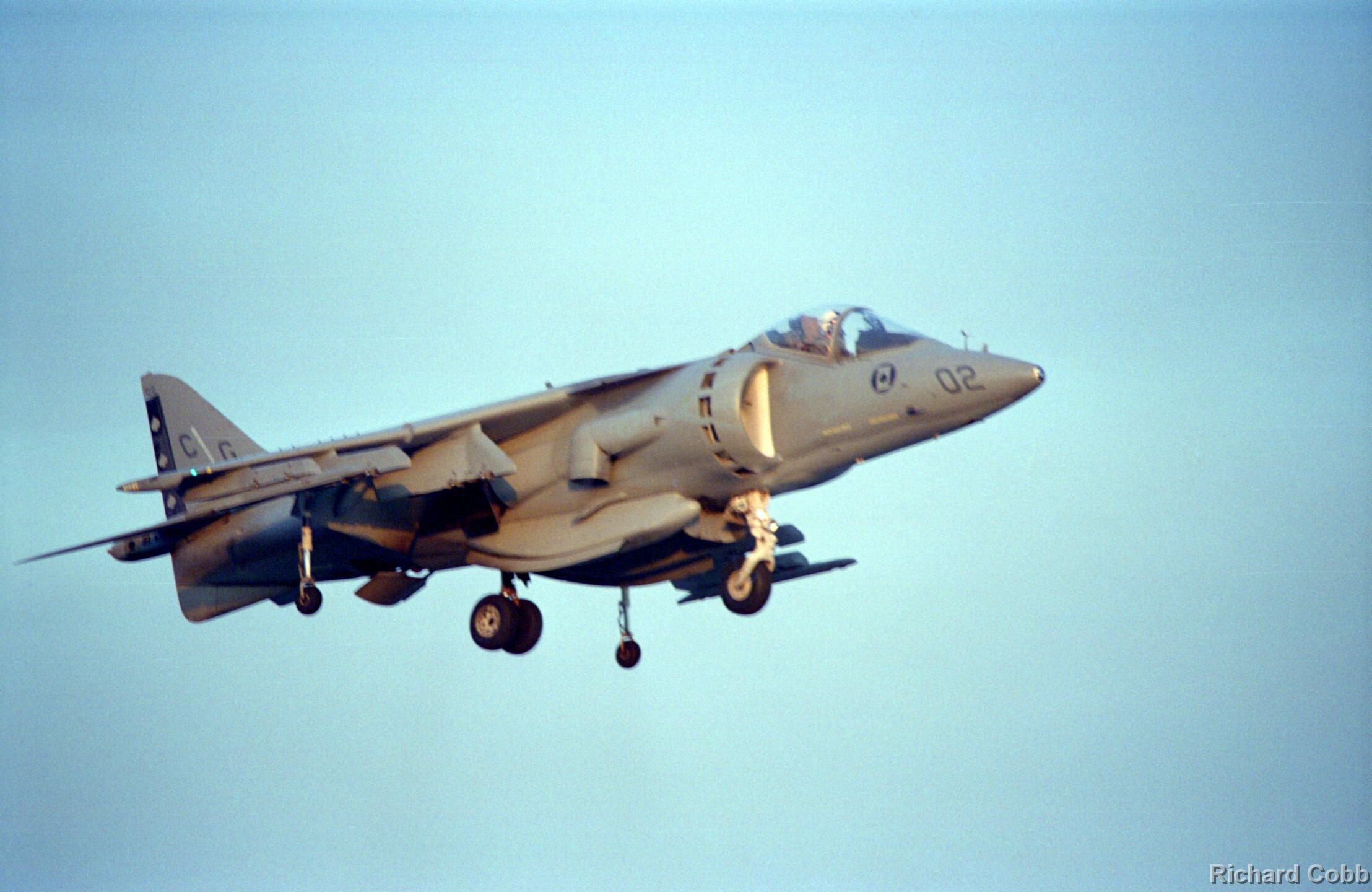
Settling down
After the pilot was over the landing area, he slowly lowered it to a landing.
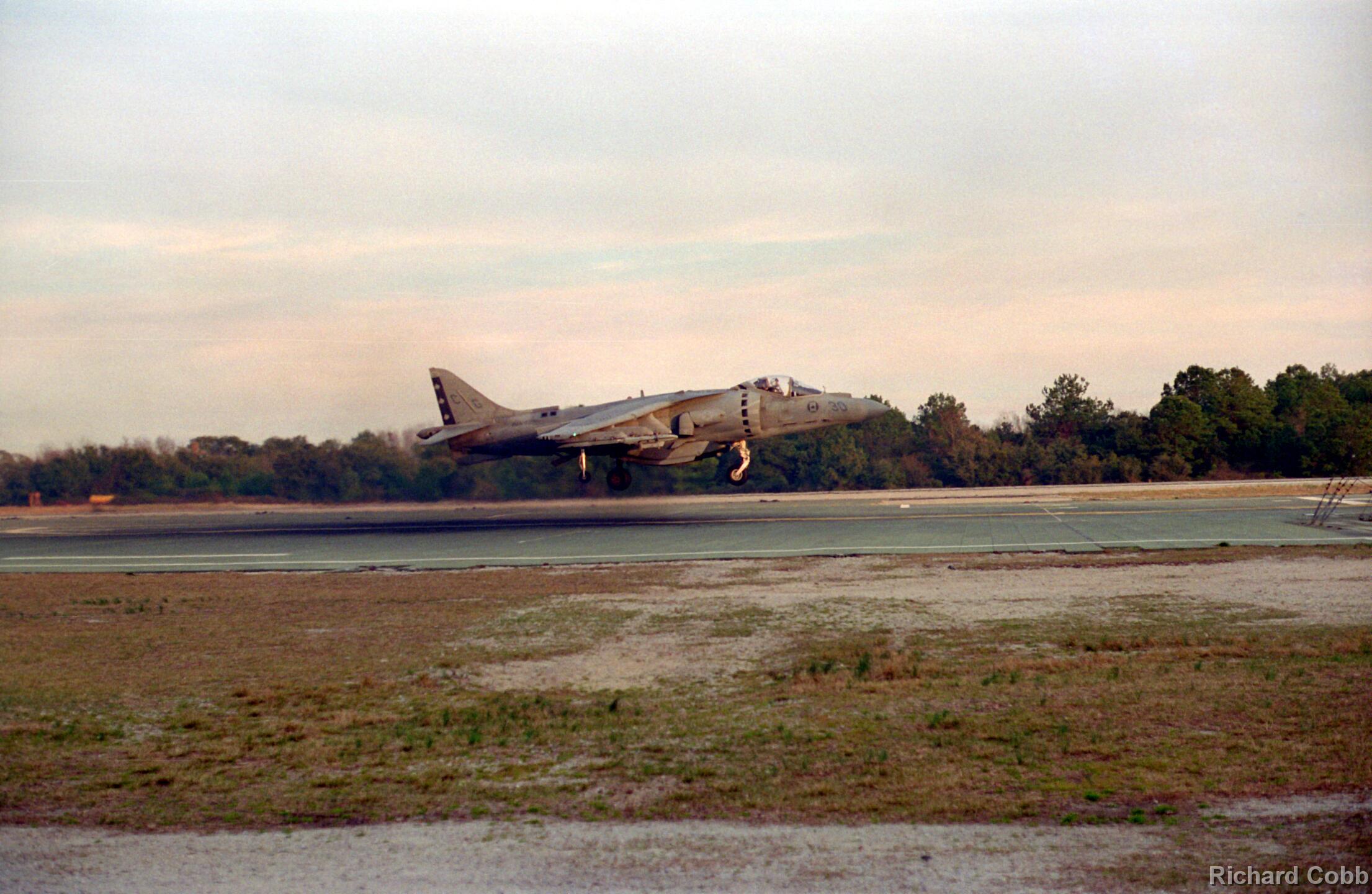
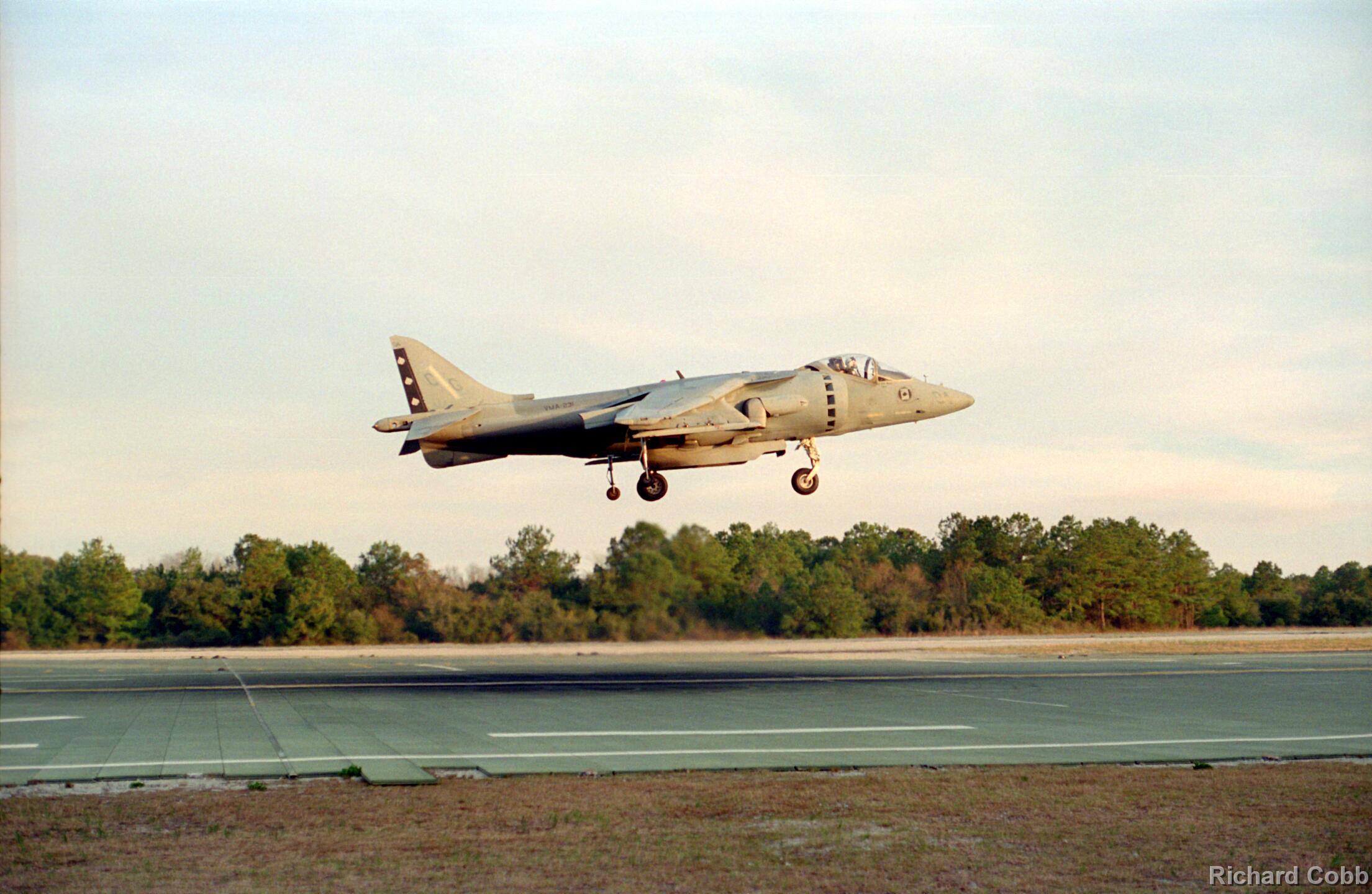
Landed
A lot less dramatic than watching a jet fighter snag an arresting cable on an aircraft carrier, but no less remarkable.
Hello
My view from the control tower walkway
Readying for Takeoff
Takeoff Roll
While they land straight down, they use a rolling takeoff, albeit not much of one. It looks more like they are taxiing, except they are flying before they are going very fast.
On the way
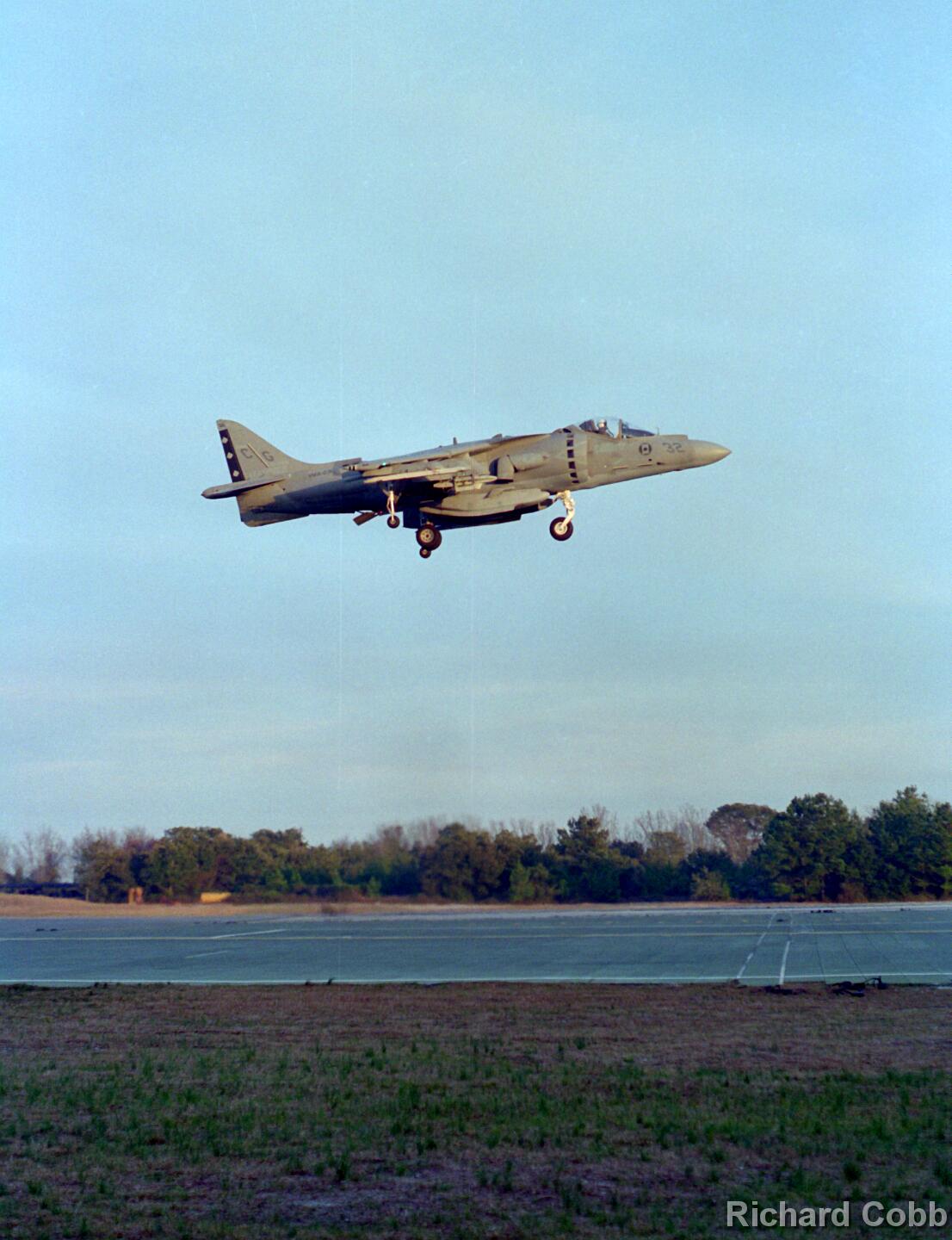
Hanging out, from a different view
I'm on the ground beside the control tower, watching the Harrier suspended. The noise, heat and fumes are not as bad here.
Settling to a landing
At the right edge there are some cables visible - these anchor the mobile control tower, which is just to the right of the photo
Bogue 11
Bogue 12
Bogue 13
Bogue 14
Back on the control tower
Hanging Out Again
If you look closely to both sides below the main wheels, the trees and airstrip have blurred areas - those are caused by the jet exhaust vector directly down.
Bogue 17
Bogue 18
5
Bogue 19
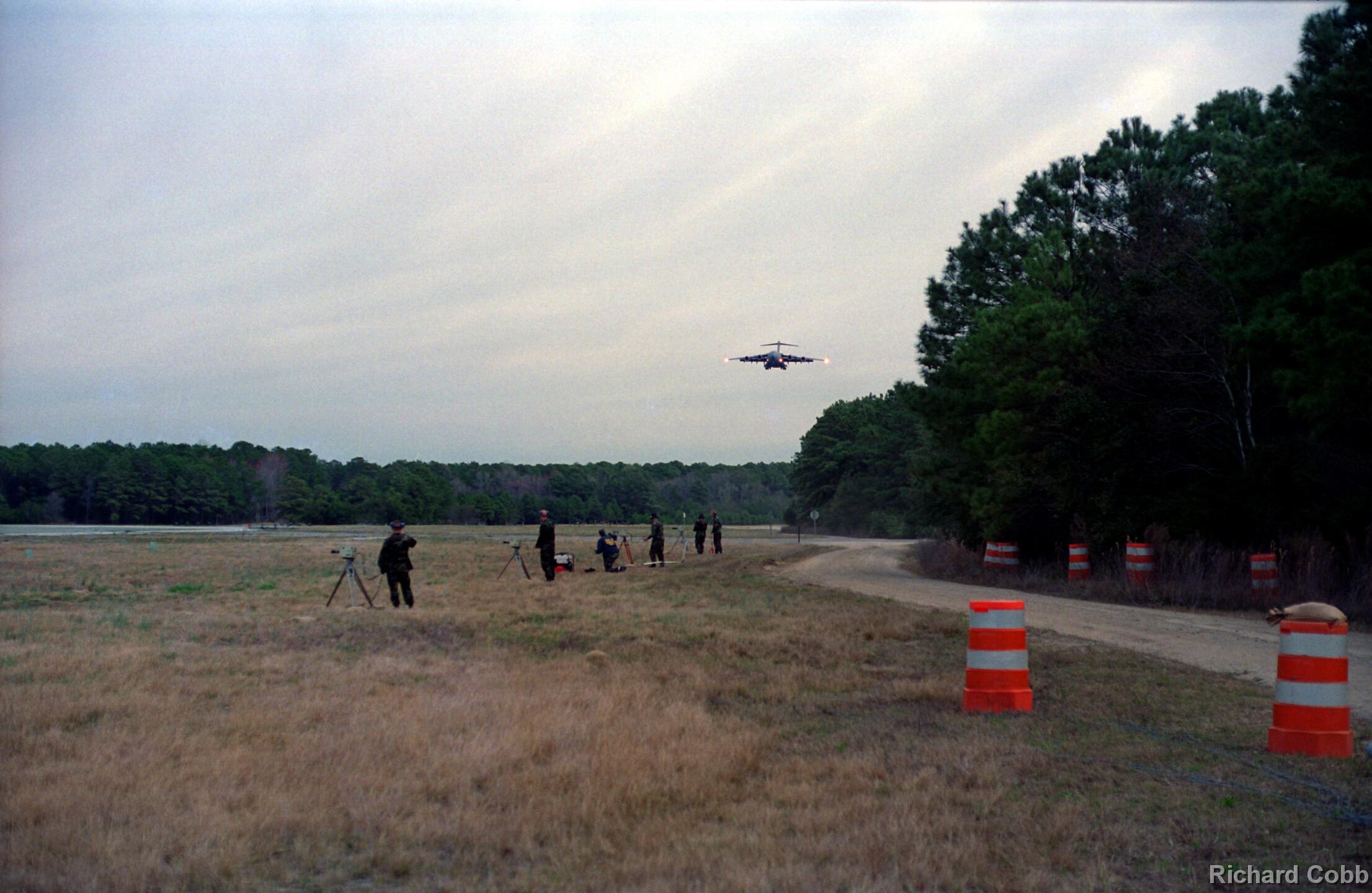
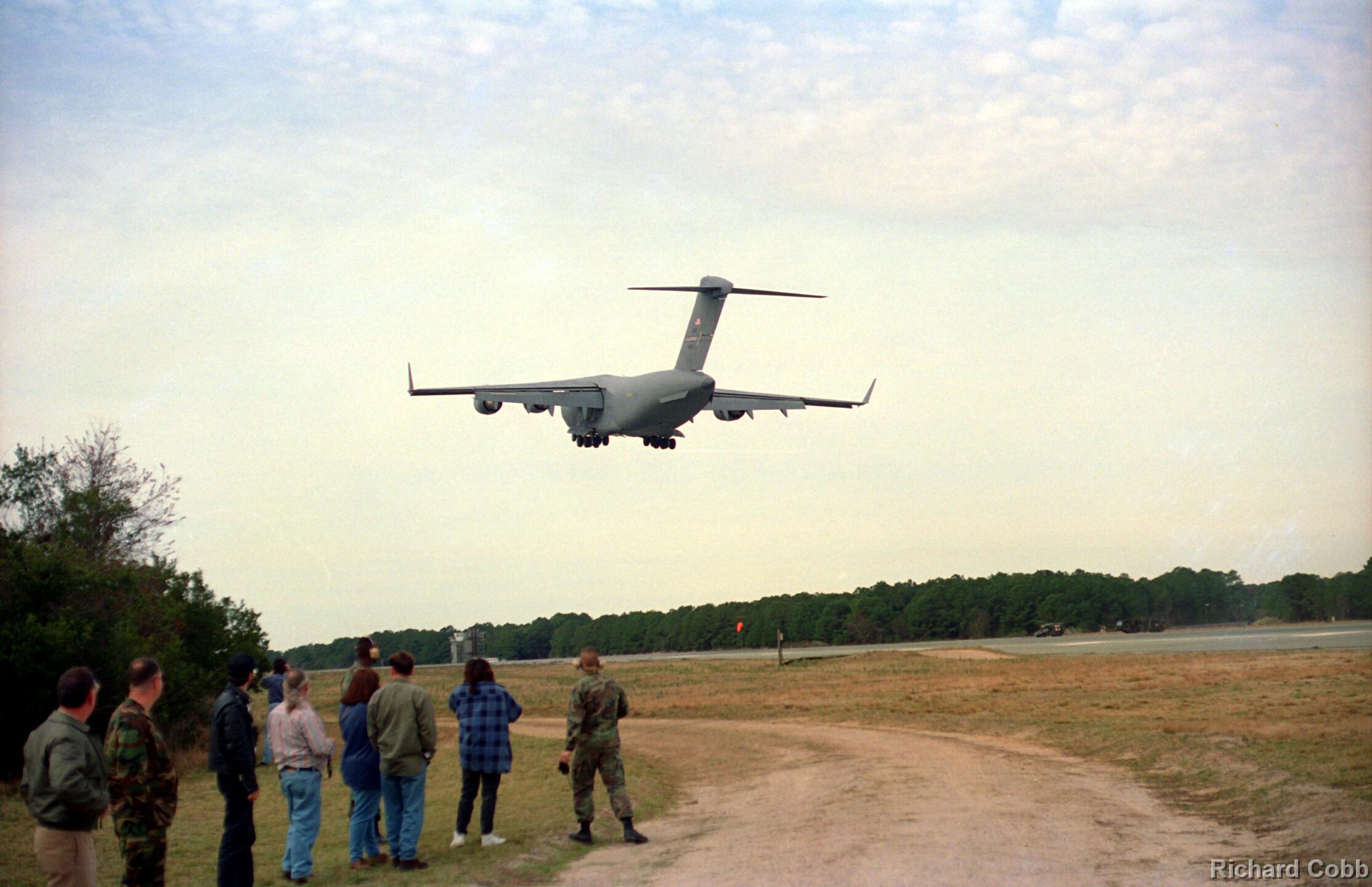
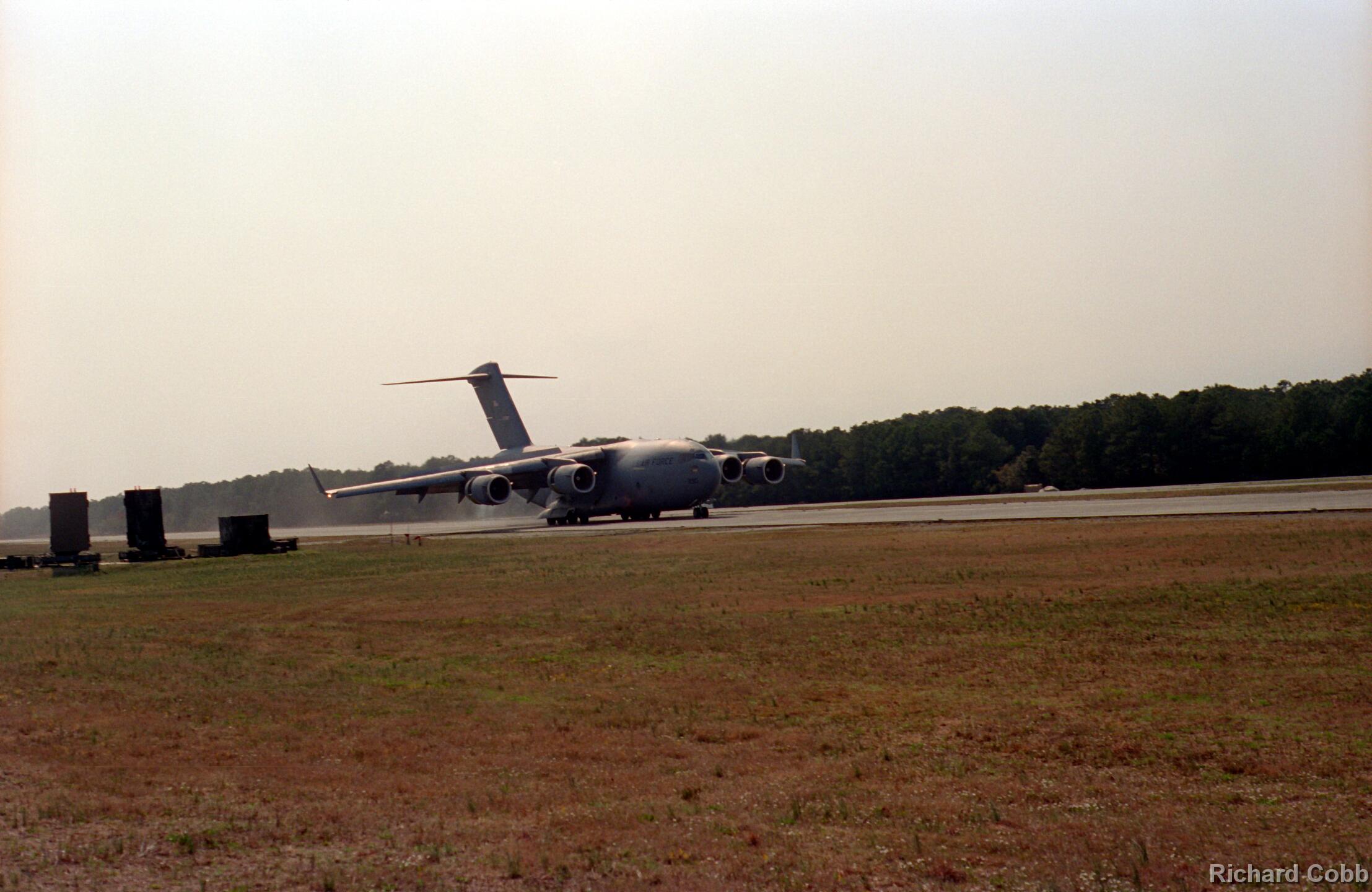
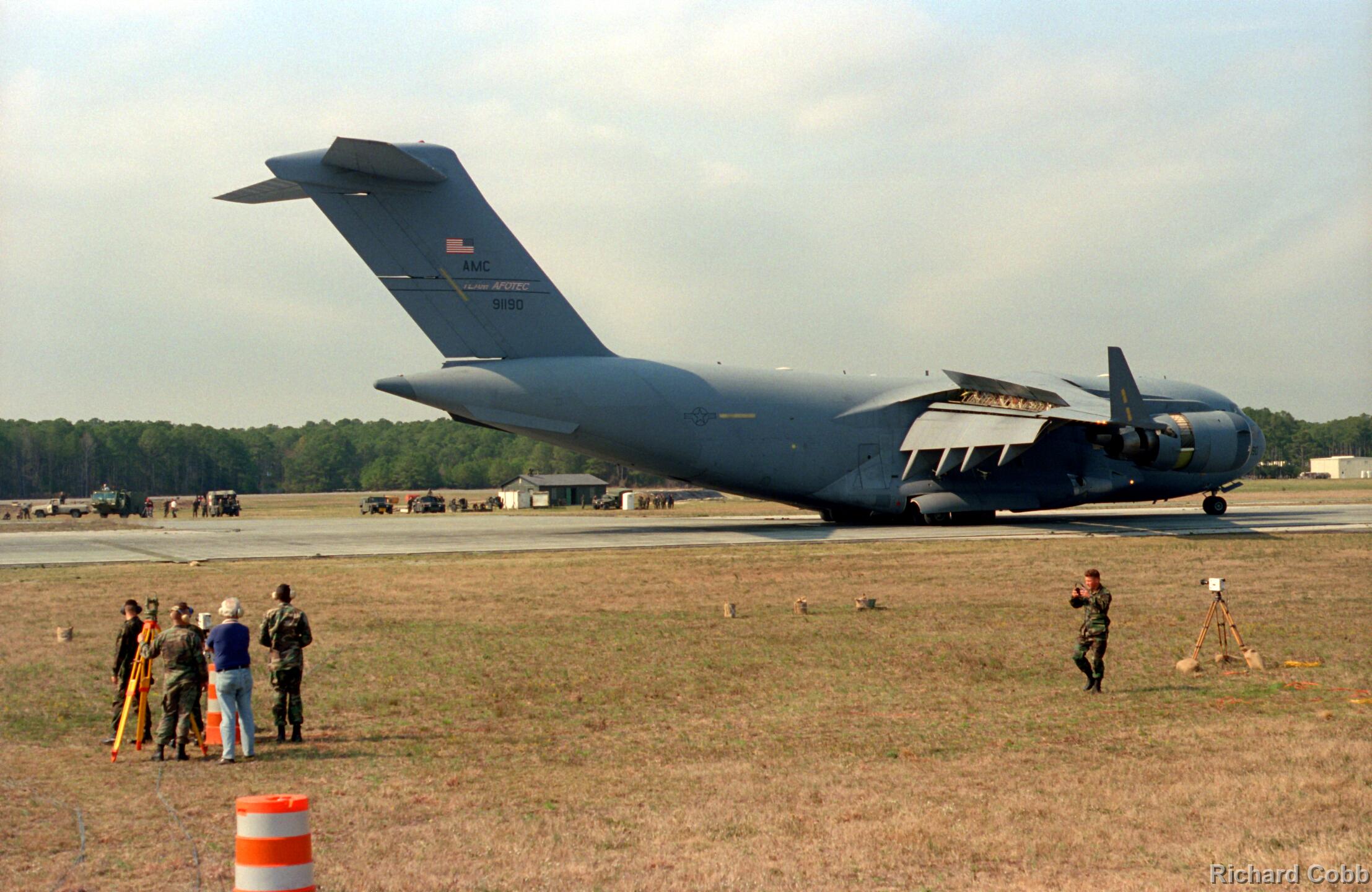
C-17 Incoming
This is after several days of installing and calibration the instrumentation in the runway. This is the reason I am here.
Test Approach
No landing planned this time - the pilot is getting a feel for the approach and what he'll be landing on
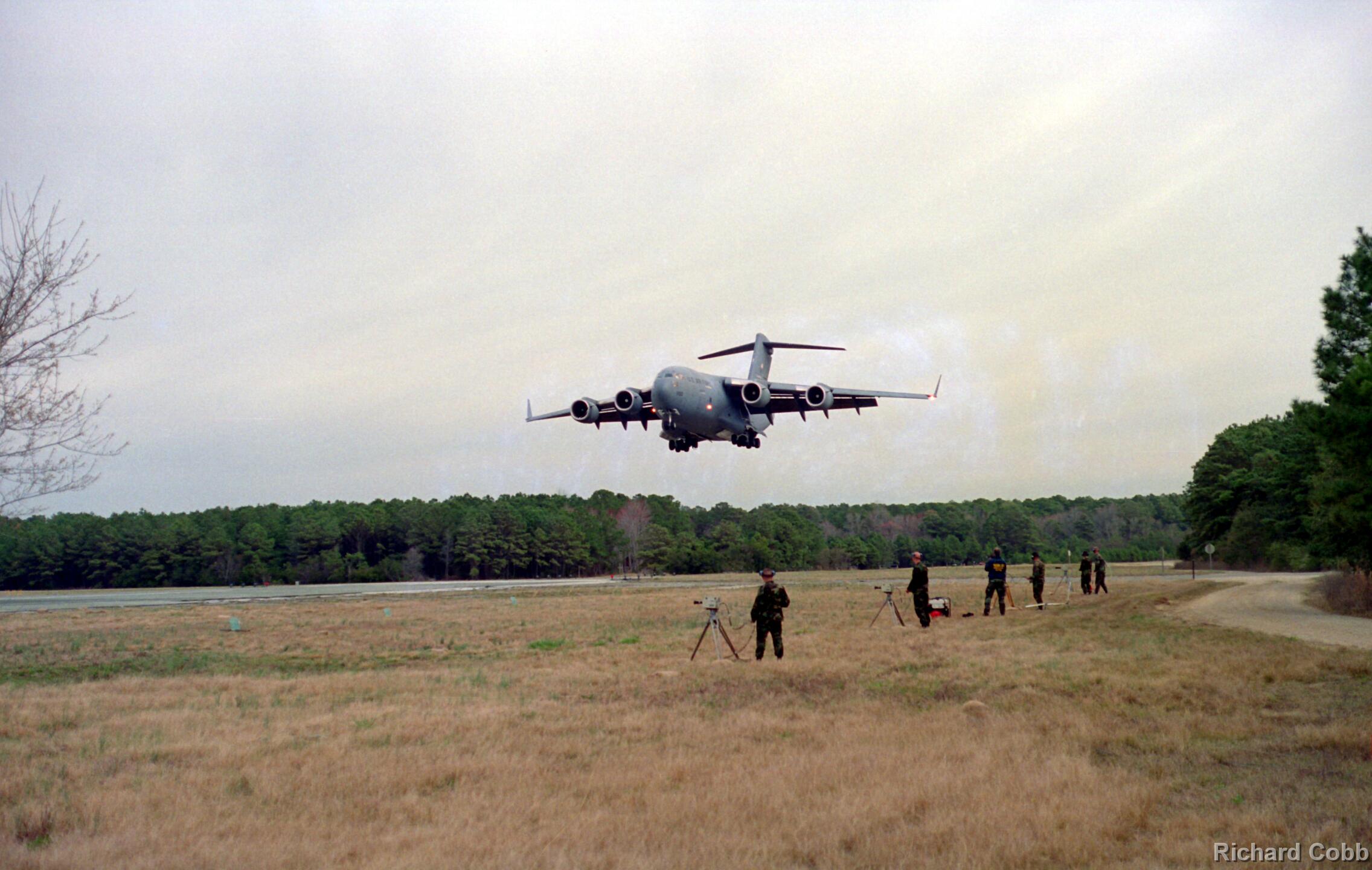
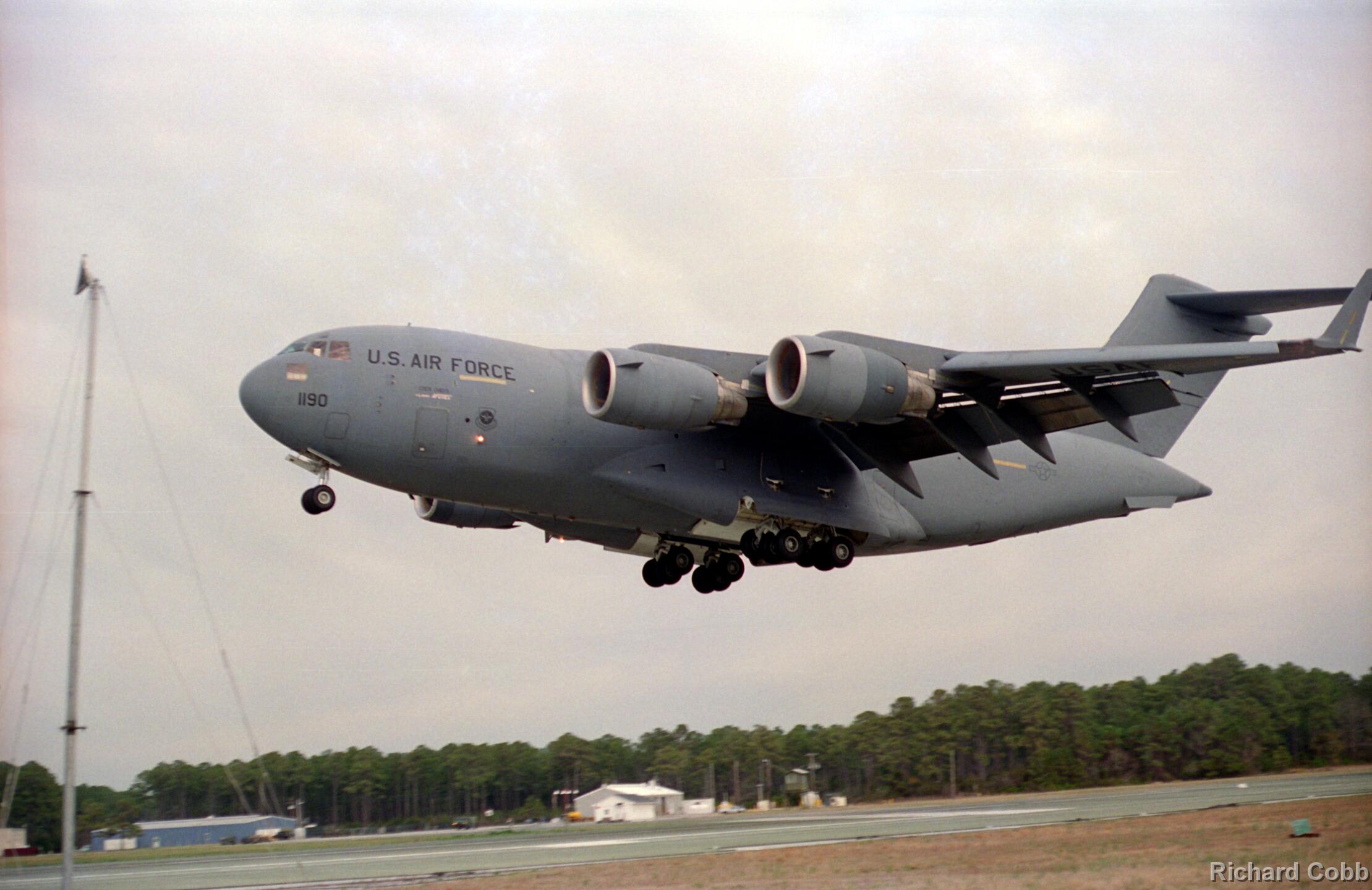
Big Plane
This one is certainly not hovering to a landing
Next one is for real
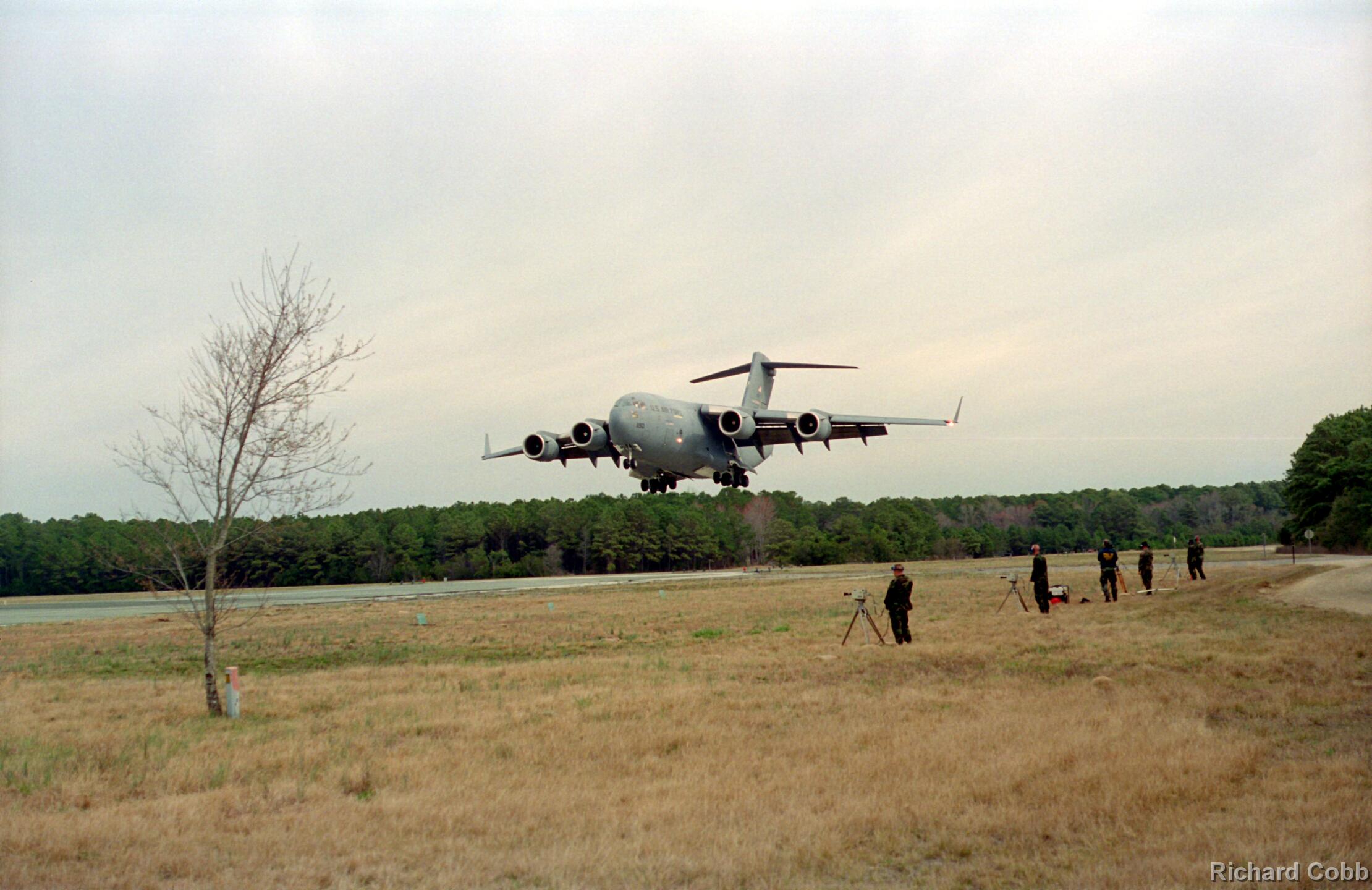
Final approach
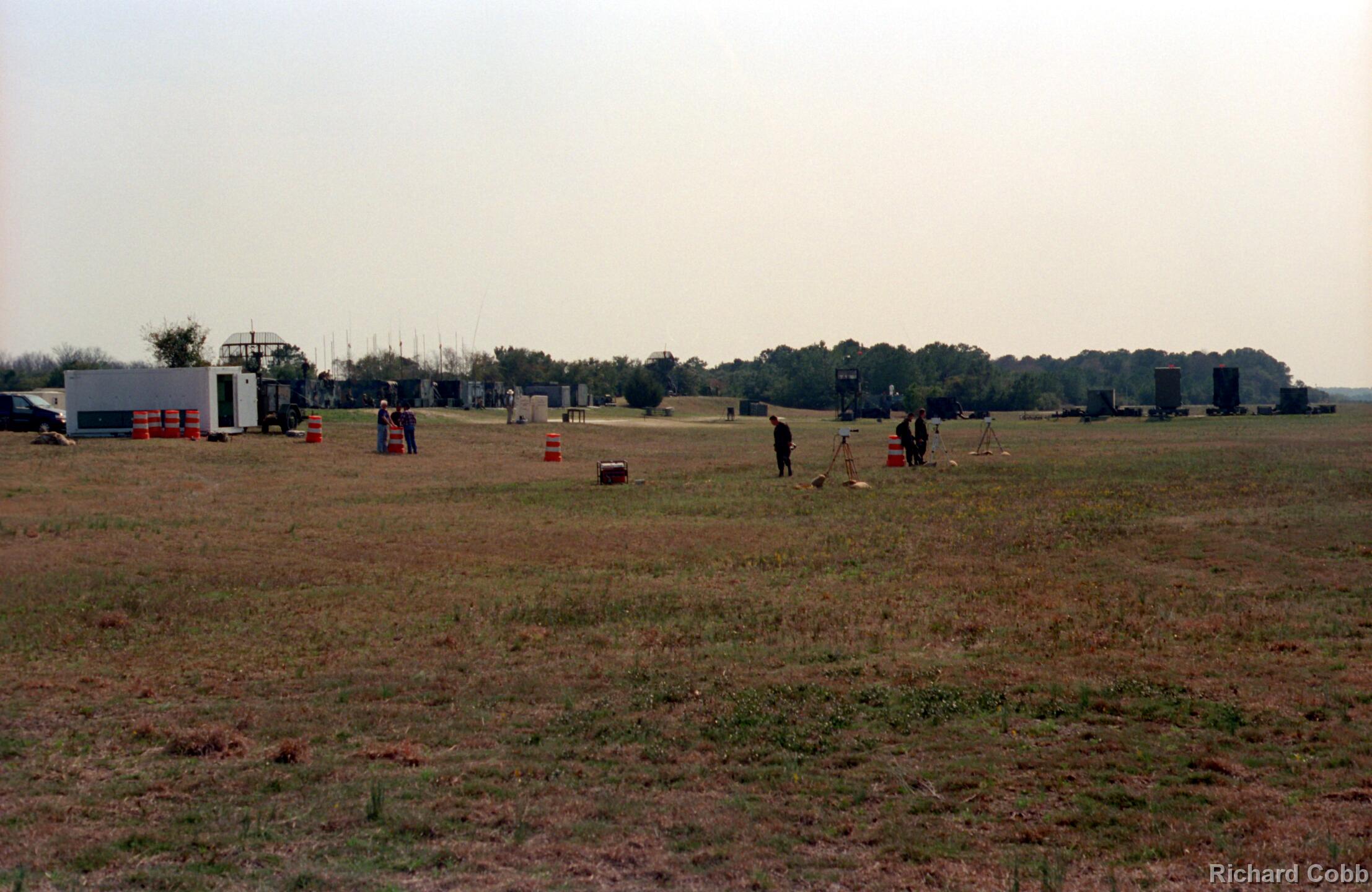
I'm not the only one there for data collection. Not sure what they are measuring, but it involves lots of things on tripods
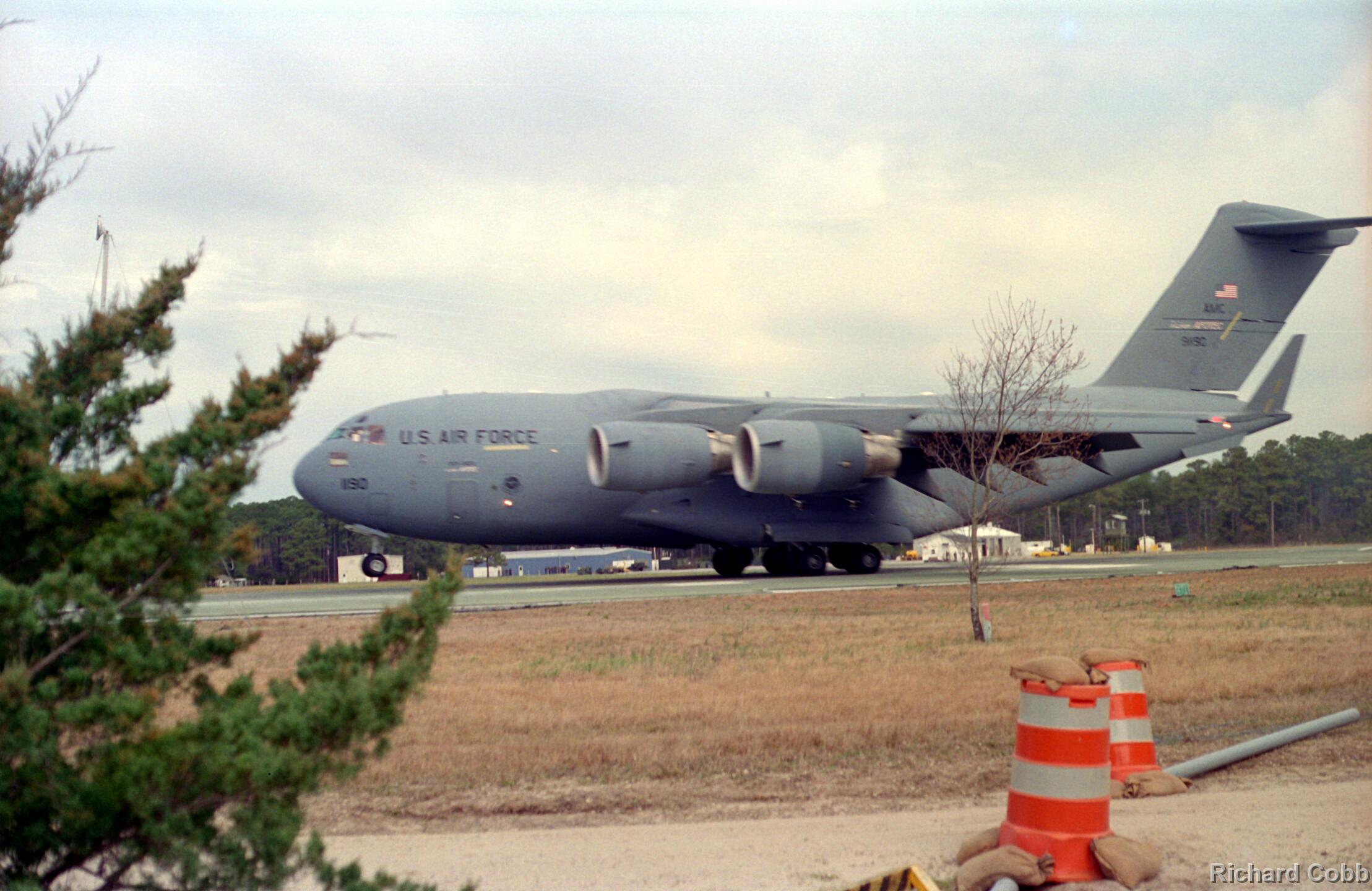
Touch down and braking
My job is to record the accelerometer data as it brakes across my instrumented panels
Bogue 26
Size Check
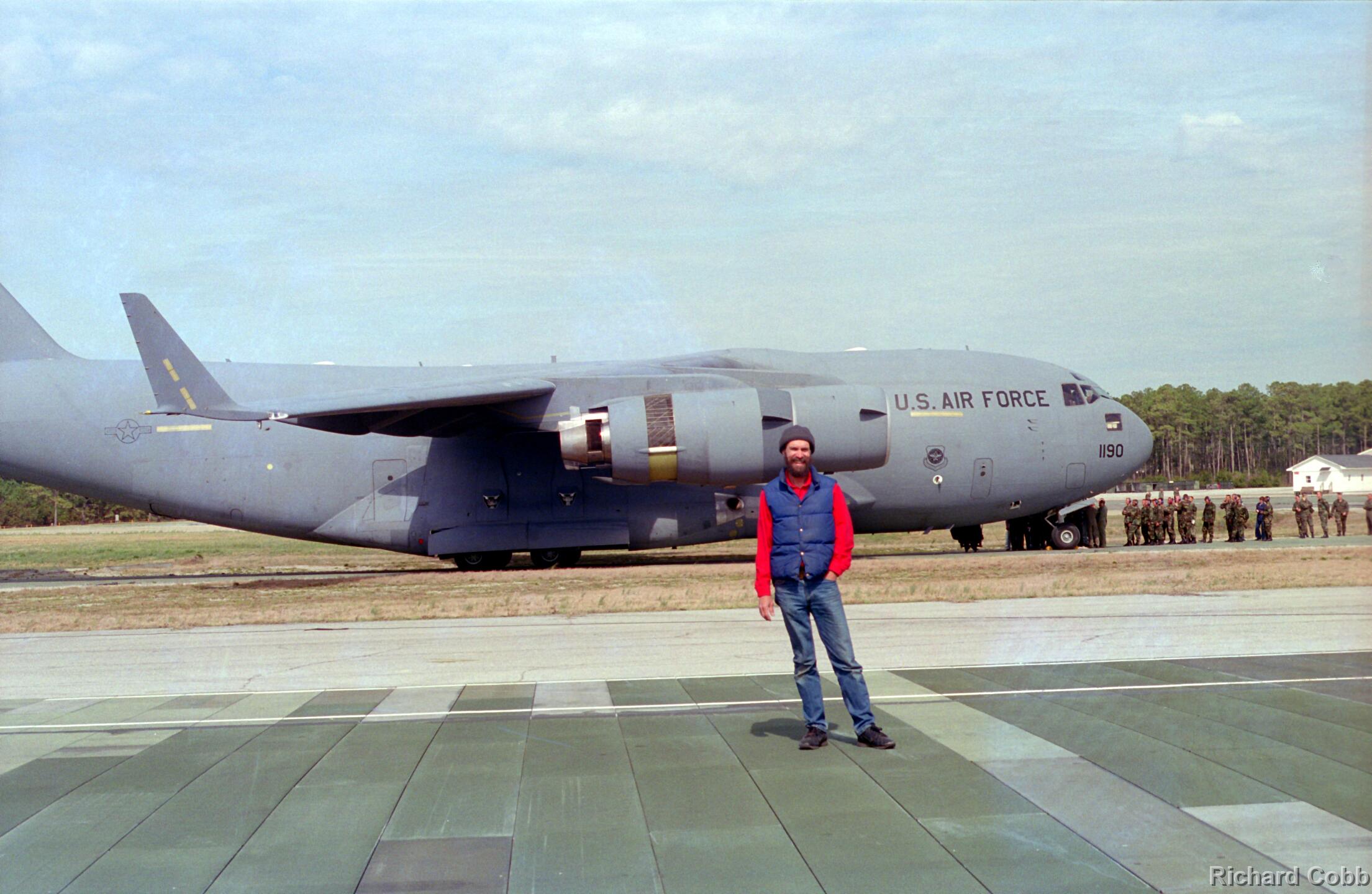
The people give a good size reference
Yours Truly
Have to have my There I Was shot
Some of the other test equipment
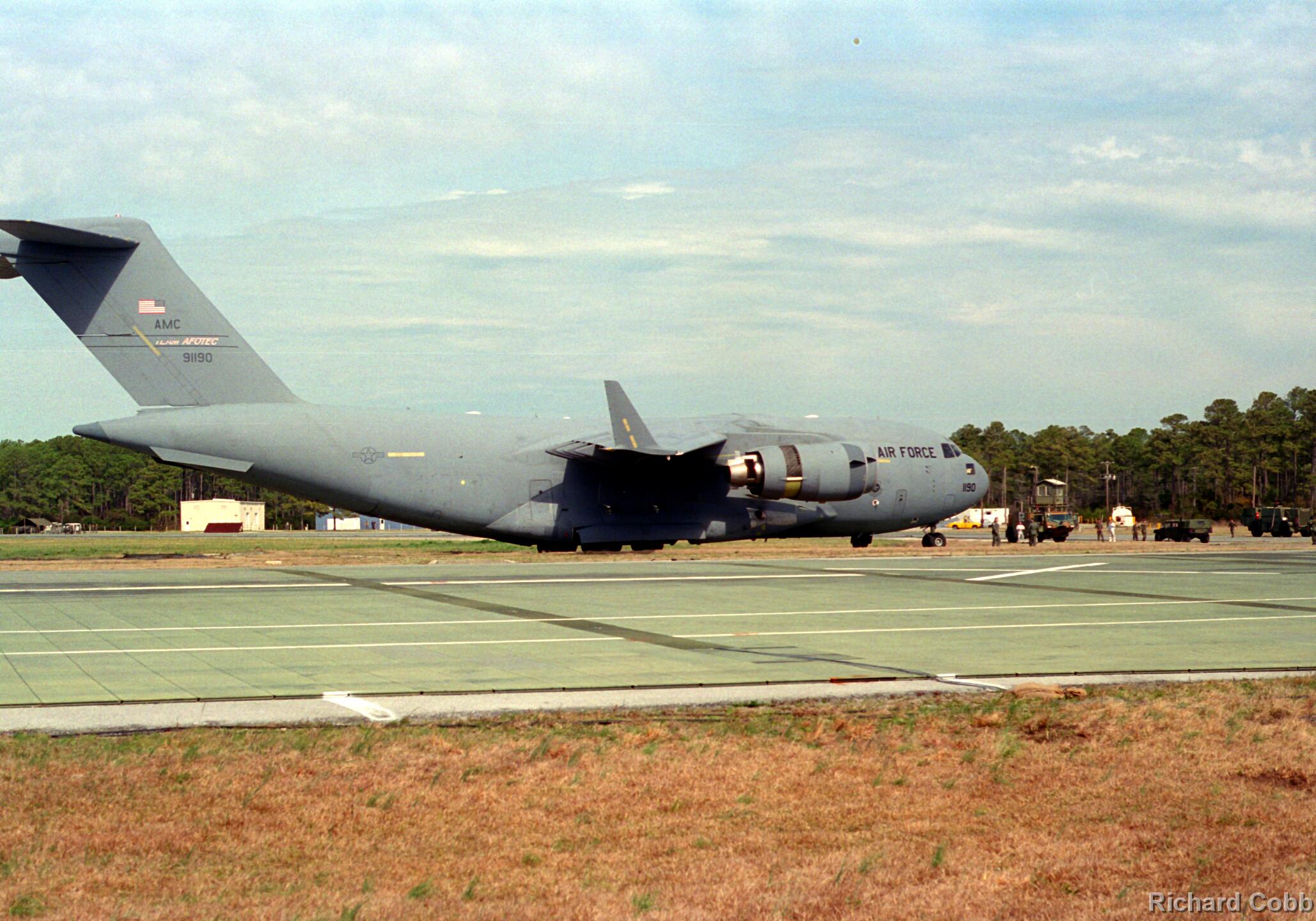
Another Landing
Full braking
My stress point was always making sure I was actively recording data when the plane crossed my panels
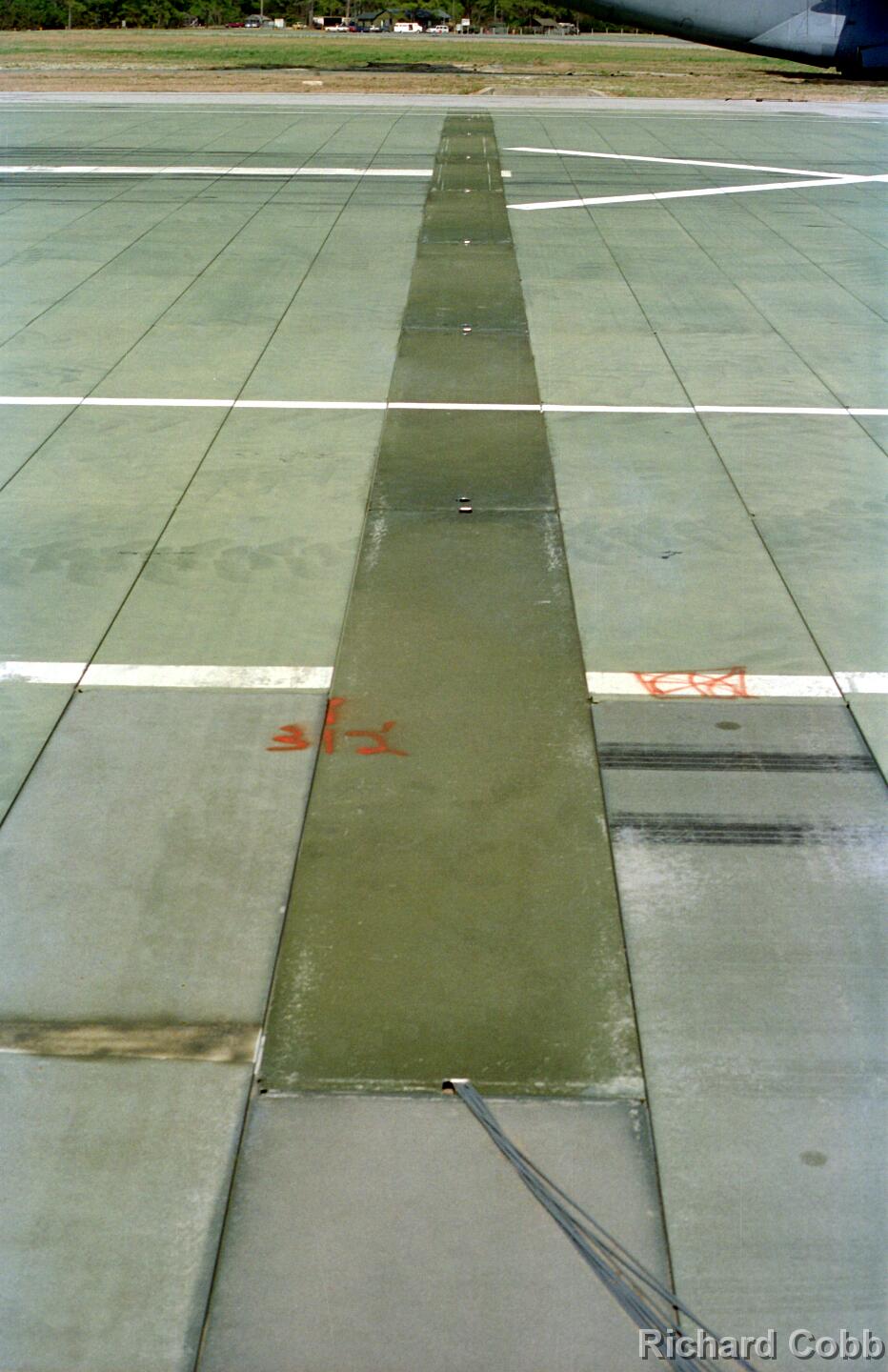
One of my Instrumented Panels
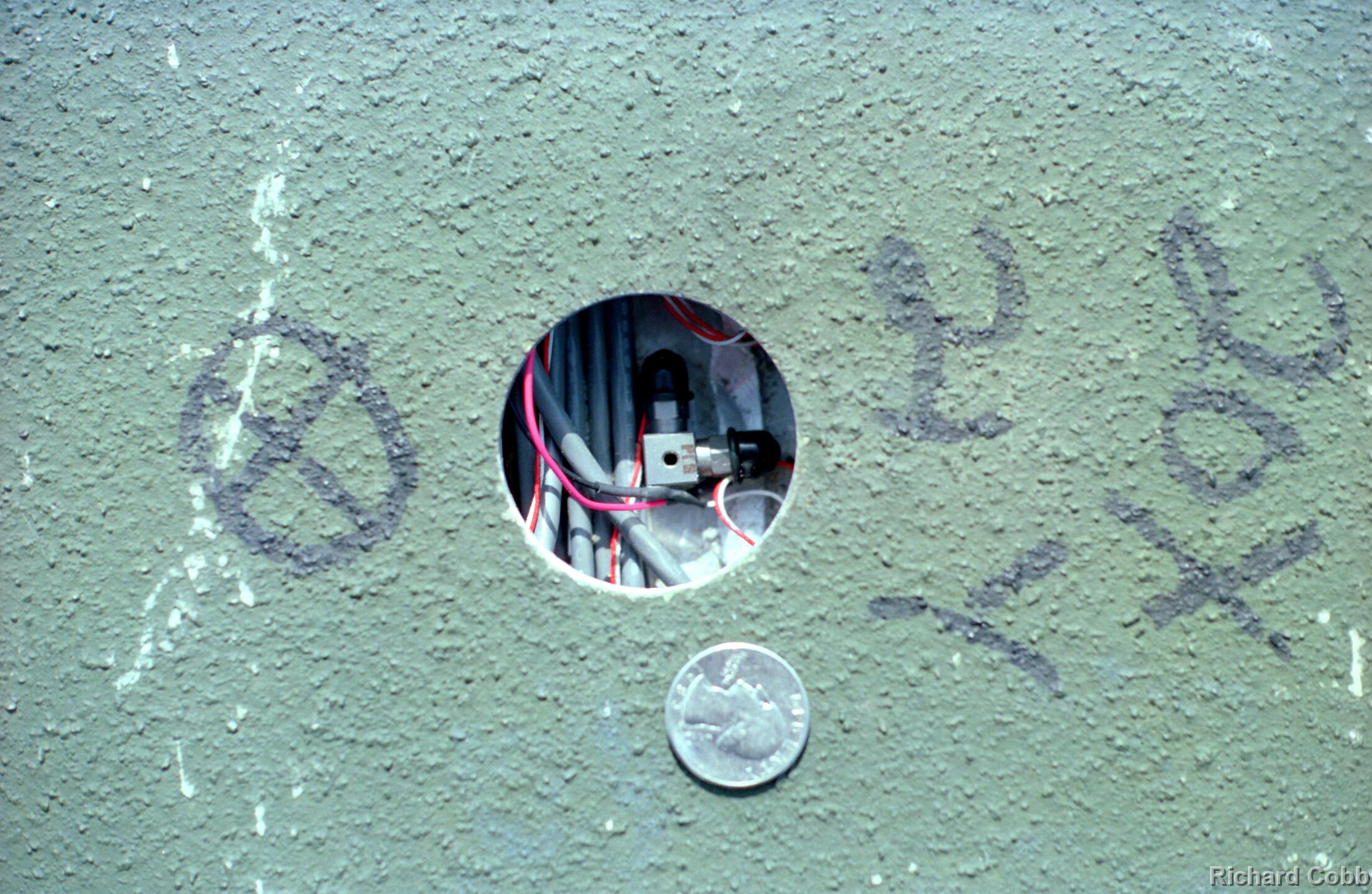
Small Accelerometers were mounted inside the panels
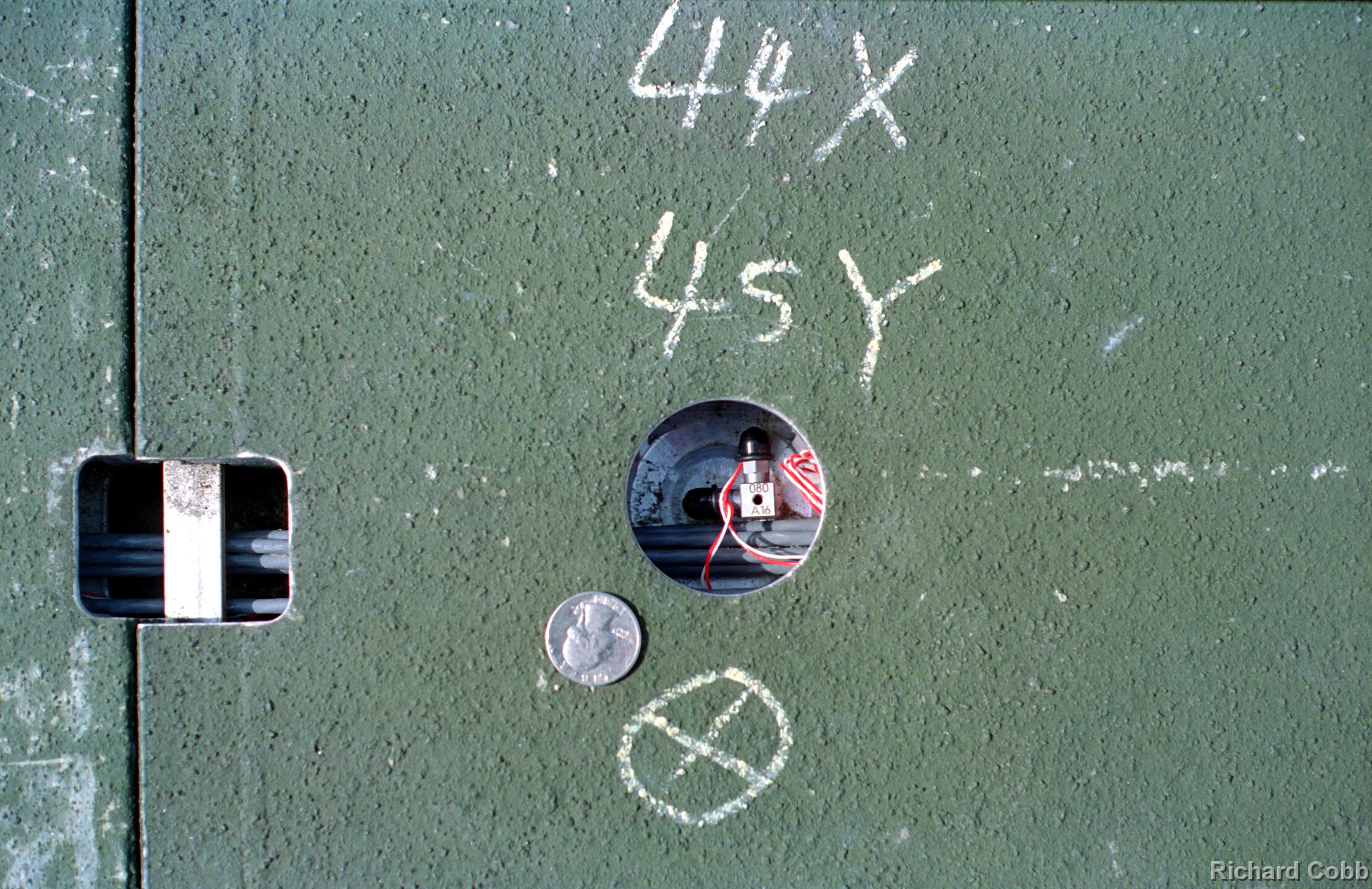
Accelerometers inside the panel
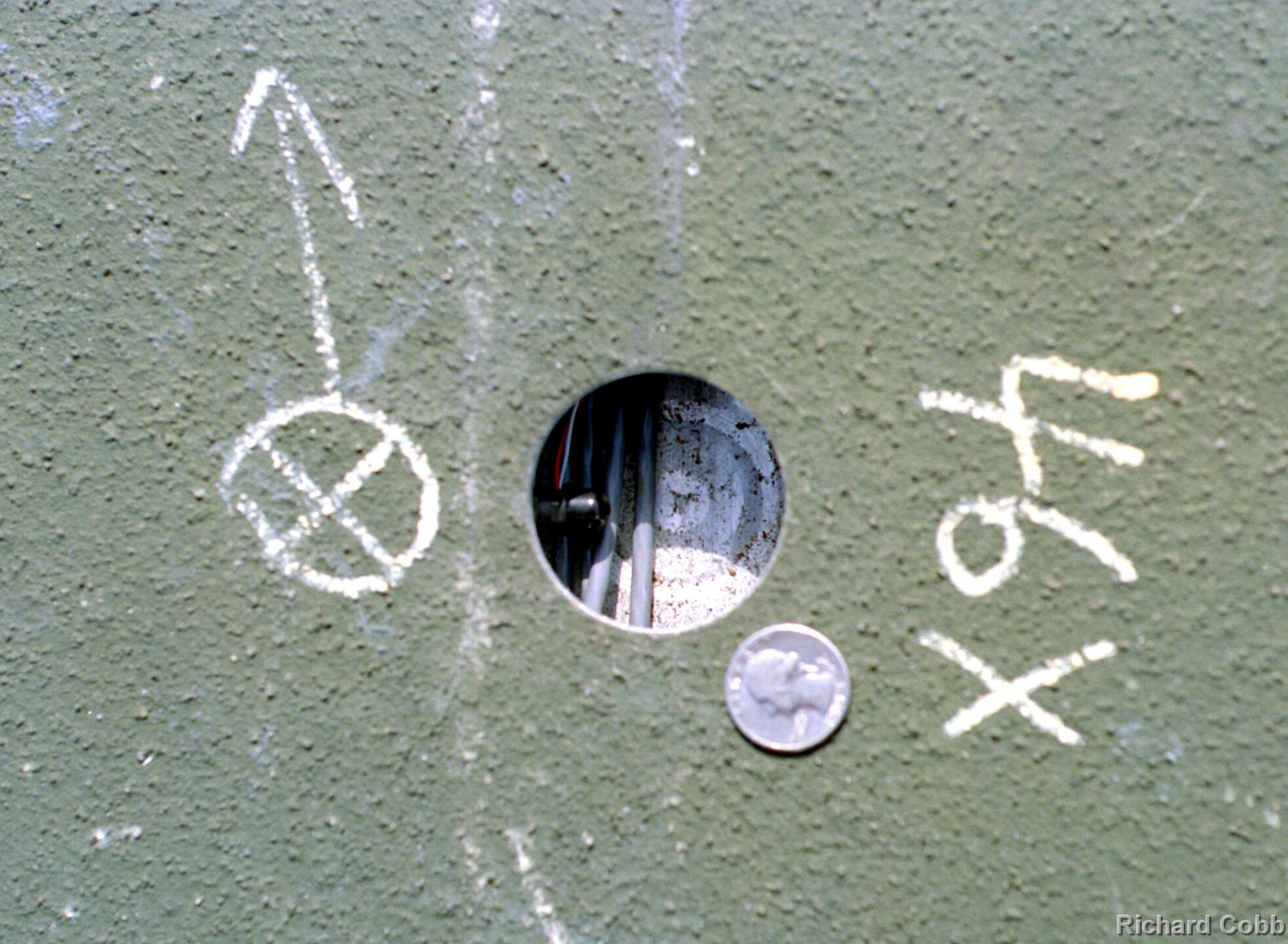
The majority of accelerometers were oriented in the direction of plane travel, but some locations, like this one, also measured sideways motion
Accelerometer 46X
I believe there were close to 60 accelerometers that were being recorded. This is #46, oriented in the X direction (direction of landing)
Another Bi-Axial Accelerometer
I really doubted the usefulness of what we were doing here - which was trying to measure movement (displacement) of the panels using accelerometers - something they are not very good at. For the Geeks: acceleration is basically displacement X frequency squared. The movement we were looking for was essentially very low frequency, so even large displacements wouldn't provide much of a signal. But high frequency vibration, like the plates banging against each other, creates a large signal with very small displacement. There is a lot of high frequency stuff going on with something like this, which overwhelms the low frequency plate displacement. But this job was designed by someone else, we were sub-contracted to just take the measurements. I'm glad I wasn't the one trying to get good analysis results from it!
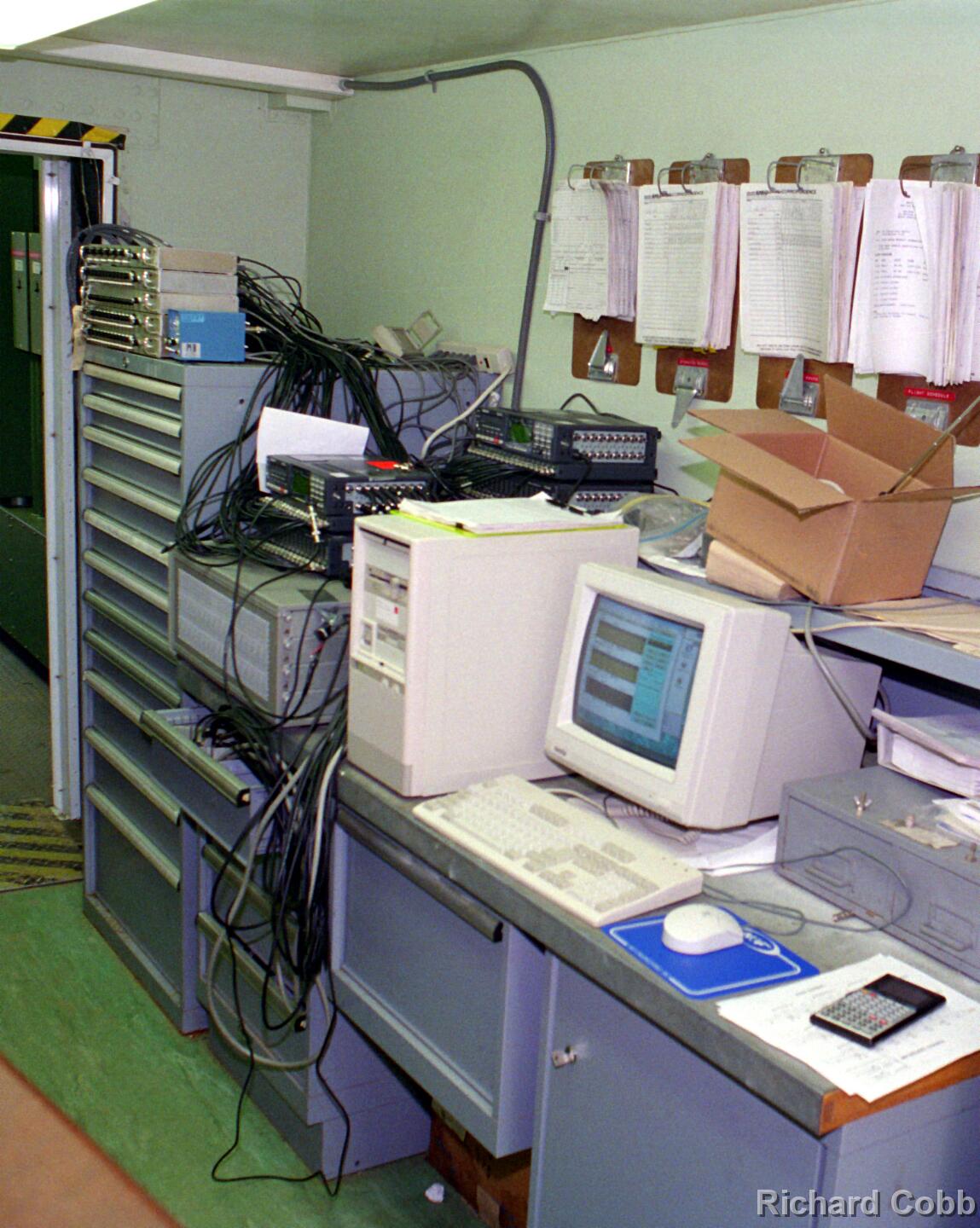
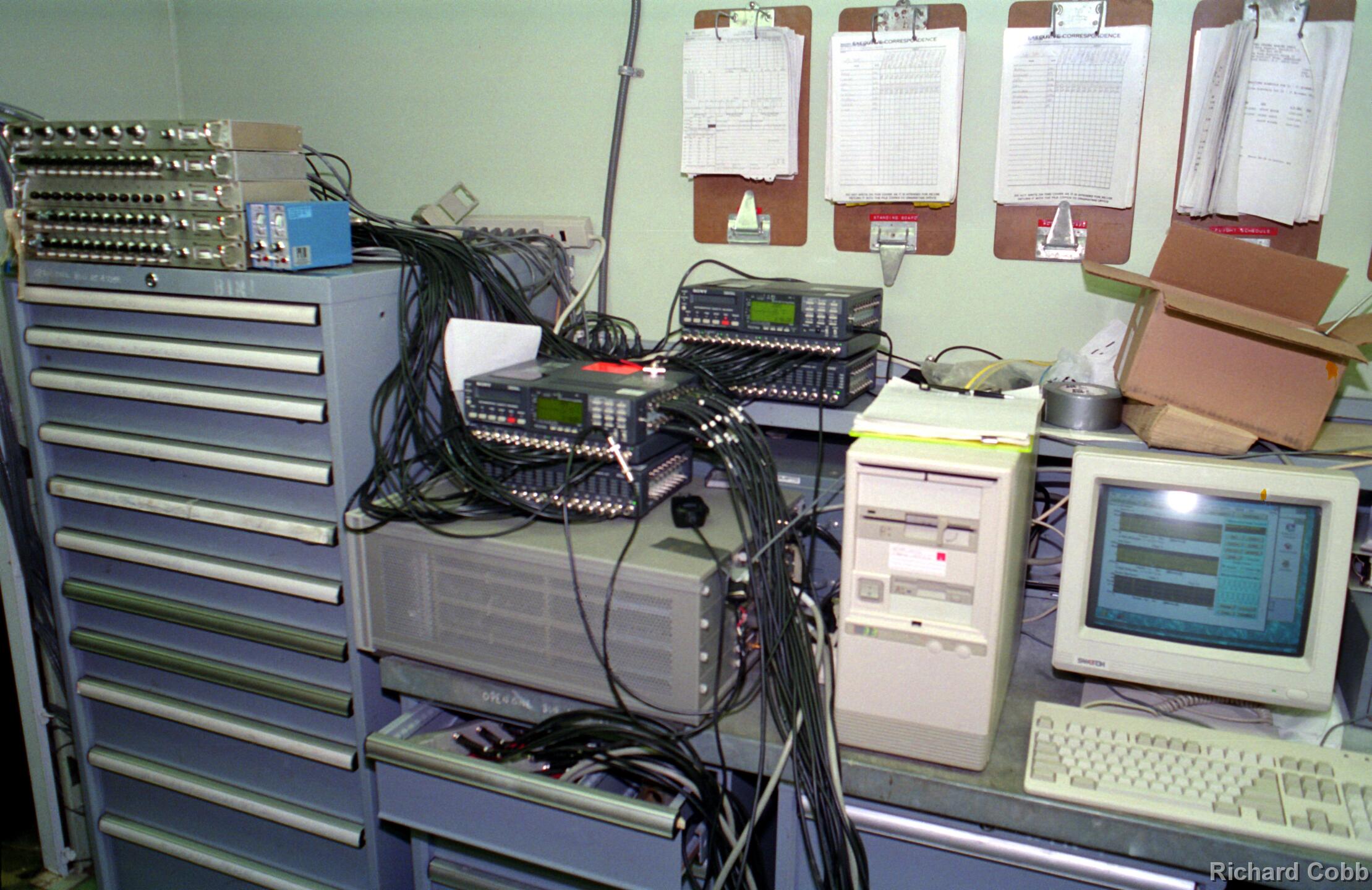
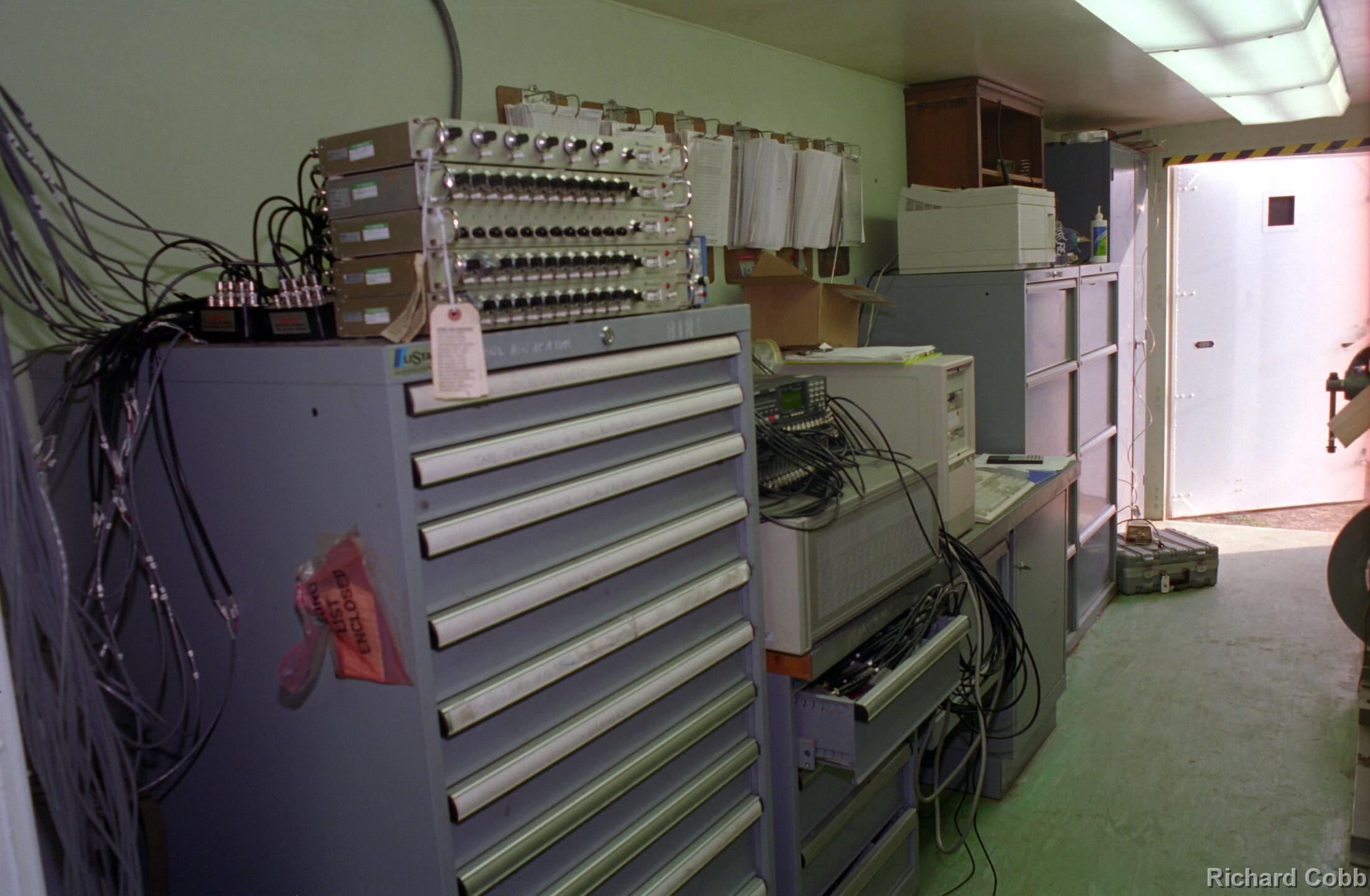
The Test Recording room
This was the test equipment used, which included amplifiers/conditioners for the accelerometers and digital tape recorders, which were about the only method available then that had the required bandwidth for 60 channels of data.
Days of Calibration
Every accelerometer had to be disconnected and removed, then attached to a calibration shaker and recorded to obtain the proper calibration values. We had factory calibration data, but that had to be confirmed as still accurate.
Home Sweet Home
Generated by jAlbum, Neptune skin